CAS 476-46-0
:Catenarin
Description:
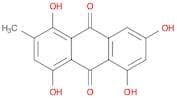
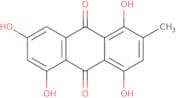
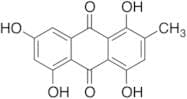
Catenarin, with the CAS number 476-46-0, is a naturally occurring flavonoid compound primarily derived from various plant sources. It is characterized by its yellow to orange pigmentation, which is typical of many flavonoids, and it exhibits antioxidant properties, contributing to its potential health benefits. Catenarin is known for its role in plant metabolism and may have implications in human health due to its ability to scavenge free radicals. The compound is soluble in organic solvents but has limited solubility in water, which is common for many flavonoids. Its structure typically includes multiple hydroxyl groups, which enhance its reactivity and biological activity. Catenarin has been studied for its potential applications in food, cosmetics, and pharmaceuticals, particularly for its anti-inflammatory and antimicrobial properties. However, further research is needed to fully understand its mechanisms of action and potential therapeutic uses.
Formula:C15H10O6
InChI:InChI=1S/C15H10O6/c1-5-2-8(17)11-12(13(5)19)14(20)7-3-6(16)4-9(18)10(7)15(11)21/h2-4,16-19H,1H3
InChI key:InChIKey=VWDXGKUTGQJJHJ-UHFFFAOYSA-N
SMILES:O=C1C=2C(C(=O)C=3C1=CC(O)=CC3O)=C(O)C=C(C)C2O
Synonyms:- 1,4,5,7-Tetrahydroxy-2-methyl-9,10-anthracenedione
- 1,4,5,7-Tetrahydroxy-2-methyl-9,10-anthraquinone
- 1,4,5,7-Tetrahydroxy-2-methylanthra-9,10-quinone
- 1,4,6,8-Tetrahydroxy-3-methylanthraquinone
- 9,10-Anthracenedione, 1,4,5,7-Tetrahydroxy-2-Methyl-
- Anthraquinone, 1,4,5,7-tetrahydroxy-2-methyl-
- Catenarin
- Caterarin
- Katenarin
- NSC 344022
Sort by
Purity (%)
0
100
|
0
|
50
|
90
|
95
|
100
Found 3 products.
1,4,6,8-Tetrahydroxy-3-methylanthraquinone
CAS:1,4,6,8-Tetrahydroxy-3-methylanthraquinone is a specialized anthraquinone derivative, which is isolated primarily from certain plant sources, showcasing its botanical origin. This compound belongs to the anthraquinone family, known for their characteristic aromatic structures and hydroxyl functionalities. The mode of action of 1,4,6,8-Tetrahydroxy-3-methylanthraquinone primarily involves its potential as a redox-active molecule due to its hydroxy groups. These groups facilitate electron transfer processes, enabling the compound to act as an antioxidant or potentially interfere with biological redox cycles.Formula:C15H10O6Purity:Min. 94 Area-%Color and Shape:PowderMolecular weight:286.24 g/mol1,4,6,8-Tetrahydroxy-3-methylanthraquinone
CAS:Controlled ProductFormula:C15H10O6Color and Shape:NeatMolecular weight:286.236