CAS 4767-03-7
:Dimethylolpropionic acid
Description:
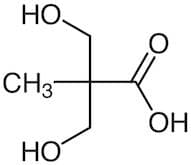
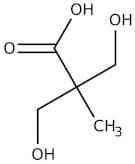
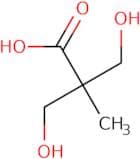
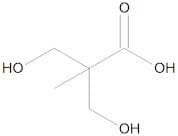
Dimethylolpropionic acid (DMPA) is a chemical compound characterized by its structure, which includes two hydroxymethyl groups and a carboxylic acid functional group. It is a white crystalline solid that is soluble in water and polar organic solvents. DMPA is primarily used as a building block in the synthesis of polyurethanes and other polymers, where it acts as a chain extender or crosslinking agent. Its unique structure allows for improved water solubility and compatibility with various resins, making it valuable in coatings, adhesives, and inks. Additionally, DMPA can enhance the mechanical properties and durability of the resulting materials. The compound is generally considered to have low toxicity, but like many chemicals, it should be handled with care, following appropriate safety guidelines. Its applications extend to the production of surfactants and other specialty chemicals, reflecting its versatility in industrial processes.
Formula:C5H10O4
InChI:InChI=1S/C5H10O4/c1-5(2-6,3-7)4(8)9/h6-7H,2-3H2,1H3,(H,8,9)
InChI key:InChIKey=PTBDIHRZYDMNKB-UHFFFAOYSA-N
SMILES:C(C(O)=O)(CO)(CO)C
Synonyms:- 2,2-Bis(hydroxymethyl)propanoic acid
- 2,2-Bis(hydroxymethyl)propionsaure
- 2,2-Bis(methylol)propionic acid
- 2,2-Dihydroxymethylpropanoic acid
- 2,2-Dimethylol Propionic Acid
- 2,2-Dimethylolpropionic acid
- 3-Hydroxy-2-(Hydroxymethyl)-2-Methylpropanoate
- 3-Hydroxy-2-(hydroxymethyl)-2-methyl-propanoic acid
- 3-Hydroxy-2-(hydroxymethyl)-2-methylpropanoic acid
- 3-Hydroxy-2-hydroxymethyl-2-methylpropionic acid
- A 05150
- Acide 2,2-bis(hydroxymethyl)propionique
- Acido 2,2-Bis(Hidroximetil)Propionico
- Bis(hydroxymethyl)propionic acid
- Bis-MPA
- Dihydroxypivalic Acid
- Dimethylolpropionic acid
- Dmpa
- Nikkamer PA
- Nsc 96616
- Propanoic acid, 2,2-bis(hydroxymethyl)-
- Propanoic acid, 3-hydroxy-2-(hydroxymethyl)-2-methyl-
- Propionic Acid, 2,2'Bis(Hydroxymethyl)-
- α,α-Bis(hydroxymethyl)propionic acid
- α,α-Dimethylolpropionic acid
- See more synonyms
Sort by
Purity (%)
0
100
|
0
|
50
|
90
|
95
|
100
Found 9 products.
2,2-Bis(hydroxymethyl)propionic Acid
CAS:Formula:C5H10O4Purity:>97.0%(GC)(T)Color and Shape:White to Almost white powder to crystalMolecular weight:134.133-Hydroxy-2-(hydroxymethyl)-2-methylpropanoic acid
CAS:Formula:C5H10O4Purity:95%Color and Shape:Liquid, No data available.Molecular weight:134.1312,2-Bis(hydroxymethyl)propionic acid, 98+%
CAS:2,2-Bis(hydroxymethyl)propionic acid is used in the synthesis and characterization studies of polyurethane dispersion modified with polymethylsiloxane (Si-PUD) and its nanocomposites incorporated with clays1.2,2-Bis(hydroxymethyl)propionic acid based dendrimers have potent applications as delivery sFormula:C5H10O4Purity:98+%Color and Shape:White, Powder or crystalline powder or crystalsMolecular weight:134.132,2-Bis(Hydroxymethyl)Propanoicacid
CAS:Formula:C5H10O4Purity:98%Color and Shape:SolidMolecular weight:134.13052,2-Bis(hydroxymethyl)propionic acid
CAS:2,2-Bis(hydroxymethyl)propionic acidPurity:95%Molecular weight:134.13g/molDimethylol propionic acid
CAS:Dimethylol propionic acid is a synthetic compound that is chemically related to the natural product paclitaxel and is used as a cross-linking agent. Dimethylol propionic acid has been shown to be effective in neutralizing, emulsifying and cross-linking of polybasic, neutralizing, and trimethylolpropane acrylic polymer systems. It is also biodegradable and can be used as an additive for deionized water. Dimethylol propionic acid may be used as a chromophore or silicon donor in organic synthesis. Stannous octoate can be used as an inorganic catalyst for this reaction.Formula:C5H10O4Purity:Min. 95%Color and Shape:PowderMolecular weight:134.13 g/mol2,2-Bis(hydroxymethyl)propionic Acid
CAS:Controlled ProductStability Hygroscopic
Applications 2,2-Bis(hydroxymethyl)propionic Acid is a reagent used in the synthesis of disulfide monomers for cross-linked poly(urethane-urea) coatings.
References Nevejans, S. et al.: Polym., 166, 229 (2019);Formula:C5H10O4Color and Shape:NeatMolecular weight:134.1305