CAS 4779-54-8
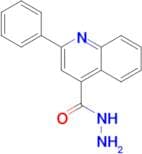
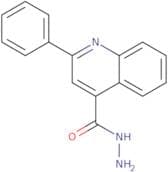
:2-phenylquinoline-4-carbohydrazide
Description:
2-Phenylquinoline-4-carbohydrazide is an organic compound characterized by its unique structure, which combines a quinoline moiety with a phenyl group and a hydrazide functional group. This compound typically appears as a solid and is known for its potential biological activities, including antimicrobial and antitumor properties. The presence of the hydrazide functional group allows for the formation of various derivatives, which can enhance its reactivity and biological efficacy. Its molecular structure contributes to its solubility in organic solvents, while its stability can vary depending on environmental conditions such as pH and temperature. 2-Phenylquinoline-4-carbohydrazide is often utilized in research settings, particularly in medicinal chemistry, where it serves as a scaffold for the development of new pharmaceutical agents. Safety data indicates that, like many organic compounds, it should be handled with care, using appropriate safety measures to avoid exposure. Overall, this compound represents a significant interest in the field of organic synthesis and drug development.
Formula:C16H13N3O
InChI:InChI=1/C16H13N3O/c17-19-16(20)13-10-15(11-6-2-1-3-7-11)18-14-9-5-4-8-12(13)14/h1-10H,17H2,(H,19,20)
SMILES:c1ccc(cc1)c1cc(c2ccccc2n1)C(=NN)O
Synonyms:- 2-Phenyl-quinoline-4-carboxylic acid hydrazide
- 4-Quinolinecarboxylic acid, 2-phenyl-, hydrazide
- 2-Phenylquinoline-4-carbohydrazide
Sort by
Purity (%)
0
100
|
0
|
50
|
90
|
95
|
100
Found 2 products.
2-Phenylquinoline-4-carboxylic acid hydrazide
CAS:Color and Shape:SolidMolecular weight:263.299987792968752-Phenylquinoline-4-carbohydrazide
CAS:2-Phenylquinoline-4-carbohydrazide is an antibacterial agent that binds to bacterial DNA gyrase and topoisomerase, which are enzymes that maintain the integrity of bacterial DNA. It also has significant anti-inflammatory activity and can be used for the treatment of skin disorders, such as acne. 2-Phenylquinoline-4-carbohydrazide has been shown to induce apoptosis in human dermal fibroblast cells. This drug has been shown to have anticancer activity in vitro and in vivo. The anticancer activity of this drug may be due to its ability to inhibit cancer cell proliferation by binding to DNA gyrase and topoisomerase, which are enzymes that maintain the integrity of bacterial DNA.Formula:C16H13N3OPurity:Min. 95%Molecular weight:263.29 g/mol