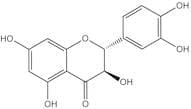
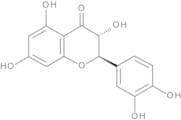
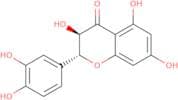
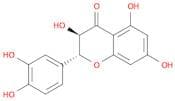
CAS 480-18-2
:Taxifolin
Description:
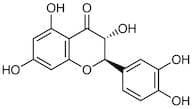
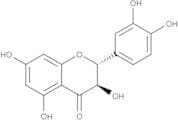
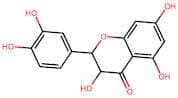
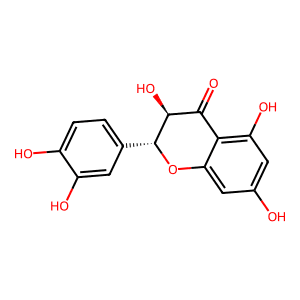
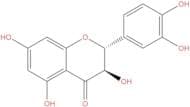
Taxifolin, also known as dihydroquercetin, is a flavonoid compound with the CAS number 480-18-2. It is primarily found in various plants, including the Siberian larch and certain fruits and vegetables. Taxifolin exhibits a range of biological activities, including antioxidant, anti-inflammatory, and potential anticancer properties, making it of interest in both nutritional and pharmaceutical research. The compound is characterized by its yellowish color and is soluble in organic solvents like ethanol and methanol, but has limited solubility in water. Taxifolin's structure features a flavan-3-ol backbone, which contributes to its ability to scavenge free radicals and modulate various biochemical pathways. Additionally, it has been studied for its potential health benefits, including cardiovascular protection and neuroprotection. Due to its natural origin and beneficial properties, taxifolin is often explored for use in dietary supplements and functional foods. However, further research is needed to fully understand its mechanisms of action and therapeutic potential.
Formula:C15H12O7
InChI:InChI=1S/C15H12O7/c16-7-4-10(19)12-11(5-7)22-15(14(21)13(12)20)6-1-2-8(17)9(18)3-6/h1-5,14-19,21H/t14-,15+/m0/s1
InChI key:InChIKey=CXQWRCVTCMQVQX-LSDHHAIUSA-N
SMILES:O=C1C=2C(O[C@@H]([C@H]1O)C3=CC(O)=C(O)C=C3)=CC(O)=CC2O
Synonyms:- (+)-Dihydroquercetin
- (+)-trans-Taxifolin
- (+/-)-Taxifolin anhydrous
- (2R,3R)-(+)-Taxifolin
- (2R,3R)-2-(3,4-Dihydroxyphenyl)-2,3-dihydro-3,5,7-trihydroxy-4H-1-benzopyran-4-one
- (2R,3R)-2-(3,4-dihydroxyphenyl)-3,5,7-trihydroxy-2,3-dihydro-4H-chromen-4-one
- (2R,3R)-3,3′,4′,5,7-Pentahydroxyflavanone
- (2R,3R)-Dihydroquercetin
- (2R-trans)-2-(3,4-Dihydroxyphenyl)-2,3-dihydro-3,5,7-trihydroxy-4-benzopyron
- (2R-trans)-2-(3,4-Dihydroxyphenyl)-2,3-dihydro-3,5,7-trihydroxy-4-benzopyrone
- (2R-trans)-2-(3,4-dihidroxifenil)-2,3-dihidro-3,5,7-trihidroxi-4-benzopirona
- (2S,3S)-2-(3,4-dihydroxyphenyl)-3,5,7-trihydroxy-2,3-dihydro-4H-chromen-4-one
- 2,3-Dihydroquercetin
- 3,5,7,3',4'-Pentahydroxyflavanone
- 3,5,7,3′,4′-Pentahydroxyflavanone
- 4H-1-Benzopyran-4-one, 2-(3,4-dihydroxyphenyl)-2,3-dihydro-3,5,7-trihydroxy-, (2R,3R)-
- 4H-1-Benzopyran-4-one, 2-(3,4-dihydroxyphenyl)-2,3-dihydro-3,5,7-trihydroxy-, (2R-trans)-
- Diquertin
- Distylin
- Flamena
- Flamena D
- Flavanone, 3,3',4',5,7-pentahydroxy-
- Flavanone, 3,3′,4′,5,7-pentahydroxy-
- Flavomix
- Jikuberuchin
- Lariksin
- Lavitol
- Taxifoliol
- See more synonyms
Sort by
Purity (%)
0
100
|
0
|
50
|
90
|
95
|
100
Found 17 products.
(+)-Taxifolin
CAS:Formula:C15H12O7Purity:>95.0%(T)(HPLC)Color and Shape:White to Light yellow powder to crystalMolecular weight:304.25(+)-Taxifolin
CAS:(+)-Taxifolin analytical standard provided with w/w absolute assay, to be used for quantitative titration.Formula:C15H12O7Purity:(HPLC) ≥98%Color and Shape:PowderMolecular weight:304.26Taxifolin
CAS:Formula:C15H12O7Purity:≥ 95.0%Color and Shape:White, off-white to fainty yellow -brown crystalline powderMolecular weight:304.25trans-Taxifolin-d3
CAS:Formula:C15H9D3O7Color and Shape:White To Off-White SolidMolecular weight:307.27Taxifolin
CAS:Taxifolin (Dihydroquercetin) is a flavonoid in many plants such as Taxus chinensis, Siberian larch, Cedrus deodara and so on.Formula:C15H12O7Purity:94.91% - 98.9%Color and Shape:Yellowish PowderMolecular weight:304.25(+)-taxifolin
CAS:Oxygen-heterocyclic compoundFormula:C15H12O7Purity:≥ 95.0 % (HPLC)Color and Shape:PowderMolecular weight:304.26(+)-trans Taxifolin
CAS:Controlled ProductApplications An antioxidant flavenoid.
References Dixon, D., et al.: J. Biol. Chem., 285, 36322 (2010), Sheu, M., et al.: Chem. Pharm. Bull., 58, 1187 (2010),Formula:C15H12O7Color and Shape:NeatMolecular weight:304.25(+)-trans-Taxifolin
CAS:(+)-trans-Taxifolin is a flavonoid compound, which is a type of plant secondary metabolite. It is naturally found in various plant sources, including the bark of Douglas fir (Pseudotsuga menziesii) and Siberian larch (Larix sibirica), as well as in milk thistle. The primary mode of action of this compound is its antioxidant activity, which involves scavenging free radicals and reducing oxidative stress within cells. This activity is facilitated by its ability to donate hydrogen atoms or electrons to neutralize reactive oxygen species, thus preventing cellular damage.Formula:C15H12O7Purity:Min. 95%Color and Shape:PowderMolecular weight:304.25 g/mol(2R,3R)-3,3',4',5,7-Pentahydroxyflavanone
CAS:Formula:C15H12O7Purity:98%Color and Shape:SolidMolecular weight:304.2516