CAS 480-39-7
:(+)-Pinocembrin
Description:
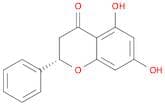
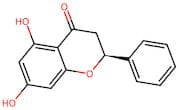
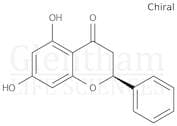
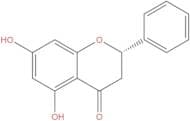
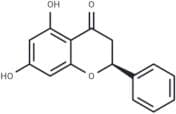
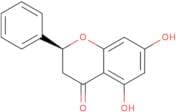
(+)-Pinocembrin, with the CAS number 480-39-7, is a flavonoid compound primarily found in various plants, particularly in the propolis produced by honeybees. It is characterized by its yellowish crystalline appearance and has a molecular formula that reflects its complex structure, which includes multiple hydroxyl groups contributing to its solubility in organic solvents. This compound exhibits a range of biological activities, including antioxidant, anti-inflammatory, and antimicrobial properties, making it of interest in both pharmacological and nutritional studies. (+)-Pinocembrin is known to interact with various biological pathways, potentially offering protective effects against oxidative stress and inflammation. Its stereochemistry, indicated by the (+) designation, refers to its specific spatial arrangement, which can influence its biological activity and interaction with other molecules. Additionally, it is often studied for its potential therapeutic applications, including neuroprotective effects and its role in traditional medicine. Overall, (+)-Pinocembrin represents a significant compound in the field of natural products and medicinal chemistry.
Formula:C15H12O4
InChI:InChI=1S/C15H12O4/c16-10-6-11(17)15-12(18)8-13(19-14(15)7-10)9-4-2-1-3-5-9/h1-7,13,16-17H,8H2/t13-/m0/s1
InChI key:InChIKey=URFCJEUYXNAHFI-ZDUSSCGKSA-N
SMILES:O=C1C=2C(O[C@@H](C1)C3=CC=CC=C3)=CC(O)=CC2O
Synonyms:- (+)-Pinocoembrin
- (2S)-2,3-Dihydro-5,7-dihydroxy-2-phenyl-4H-1-benzopyran-4-one
- (2S)-5,7-Dihydroxy-2-phenyl-2,3-dihydrochromen-4-one
- (2S)-Pinocembrin
- 4H-1-Benzopyran-4-one, 2,3-dihydro-5,7-dihydroxy-2-phenyl-
- 4H-1-Benzopyran-4-one, 2,3-dihydro-5,7-dihydroxy-2-phenyl-, (2S)-
- 4H-1-Benzopyran-4-one, 2,3-dihydro-5,7-dihydroxy-2-phenyl-, (S)-
- 5,7-Dihydroxy-2-Phenyl-Chroman-3-One
- 5,7-Dihydroxy-2-phenyl-2,3-dihydro-4H-chromen-4-on
- 5,7-Dihydroxyflavanone
- Dihydrochrysin
- Galangin flavanone
- NSC 279005
- Pinocembrin
- See more synonyms
Sort by
Purity (%)
0
100
|
0
|
50
|
90
|
95
|
100
Found 6 products.
Pinocembrin
CAS:Formula:C15H12O4Purity:≥ 98.0%Color and Shape:White to pale-yellow or yellow crystalline powderMolecular weight:256.26Pinocembrin
CAS:Pinocembrin is a major flavonoid molecule incorporated as multifunctional in the pharmaceutical industry. Its vast range of pharmacological activities has been well researched including antimicrobial, neuroprotective, anti-inflammatory, antioxidant, and anticancer activities. Pinocembrin inhibited LPS-induced inflammatory mediators production by suppressing PI3K/Akt/NF-κB signaling pathway, it also inhibited TGF-β1-induced epithelial-mesenchymal transition (EMT) and metastasis of Y-79 cells by inactivating the αvβ3 integrin/FAK/p38α signaling pathway.Formula:C15H12O4Purity:95%~99%Molecular weight:256.257Pinocembrin
CAS:Pinocembrin (5,7-Dihydroxyflavanone) is a flavanone, a type of flavonoid. It is an antioxidant found in damiana, honey, fingerroot, and propolis.Formula:C15H12O4Purity:99.61% - >99.99%Color and Shape:SolidMolecular weight:256.25(+)-Pinocembrin
CAS:(+)-Pinocembrin is a flavonoid compound, which is a naturally occurring phytochemical. It is predominantly sourced from propolis, a resinous substance produced by bees, and also found in various plants such as honey and ginger root. The mode of action of (+)-Pinocembrin involves its potent antioxidant and antimicrobial properties. It acts by scavenging free radicals, thereby protecting cells from oxidative stress, and it also interferes with microbial cell membranes, leading to antimicrobial effects.Formula:C15H12O4Purity:Min. 98 Area-%Color and Shape:PowderMolecular weight:256.25 g/mol