CAS 4819-77-6
:1,1,2-Triethoxyethane
Description:
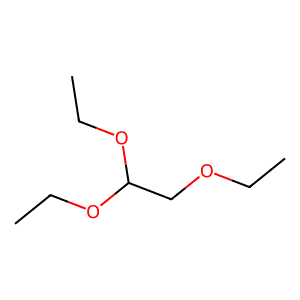
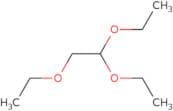
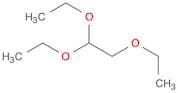
1,1,2-Triethoxyethane, with the CAS number 4819-77-6, is an organic compound characterized by its ether functional groups. It features a central ethane backbone with three ethoxy groups (-OCH2CH3) attached to the first and second carbon atoms. This structure contributes to its properties as a colorless, viscous liquid that is generally non-polar and hydrophobic. The presence of multiple ethoxy groups enhances its solubility in organic solvents while limiting its miscibility with water. 1,1,2-Triethoxyethane is often utilized as a solvent in various chemical reactions and processes, particularly in organic synthesis. Its relatively low volatility and stability under standard conditions make it suitable for applications requiring prolonged exposure to heat or reactive environments. Additionally, it may exhibit low toxicity, but safety precautions should still be observed when handling the substance. Overall, 1,1,2-Triethoxyethane is valued in the chemical industry for its unique properties and versatility in various applications.
Formula:C8H18O3
InChI:InChI=1S/C8H18O3/c1-4-9-7-8(10-5-2)11-6-3/h8H,4-7H2,1-3H3
InChI key:InChIKey=VNSJUZIHZNZLKM-UHFFFAOYSA-N
SMILES:C(COCC)(OCC)OCC
Synonyms:- 1,1,2-Triethoxyethane
- 1,2,2-Triethoxyethane
- 2-Ethoxyacetaldehyde diethylacetal
- Acetaldehyde, ethoxy-, diethyl acetal
- Ethane, 1,1,2-triethoxy-
- Ethoxyacetaldehyde diethyl acetal
- NSC 62041
Sort by
Purity (%)
0
100
|
0
|
50
|
90
|
95
|
100
Found 3 products.
2-Ethoxyacetaldehyde diethylacetal
CAS:2-Ethoxyacetaldehyde diethylacetalPurity:97%Molecular weight:162.23g/mol1,1,2-Triethoxyethane
CAS:1,1,2-Triethoxyethane is a solvent with a high boiling point and low volatility. It is used as a reagent in organic chemistry and as an intermediate in the production of pharmaceuticals such as erythromycin. 1,1,2-Triethoxyethane is relatively non-reactive to other chemical compounds because it does not undergo elimination reactions or acidic reactions easily. The compound has been shown to be capable of selectively reacting with levulinate at the C3 position with nitro groups at the C5 position. This selective reaction can lead to erythromycin derivatives.Formula:C8H18O3Purity:Min. 95%Molecular weight:162.23 g/mol