CAS 483-92-1
:Luvangetin
Description:
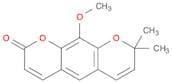
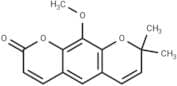
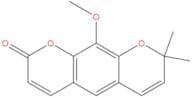
Luvangetin, with the CAS number 483-92-1, is a naturally occurring flavonoid compound primarily derived from various plant sources. It is characterized by its polyphenolic structure, which contributes to its antioxidant properties. Luvangetin exhibits a range of biological activities, including anti-inflammatory, antimicrobial, and potential anticancer effects, making it of interest in pharmacological research. The compound is typically soluble in organic solvents and may have limited solubility in water, which is common for many flavonoids. Its chemical structure includes multiple hydroxyl groups that enhance its reactivity and interaction with biological systems. Additionally, Luvangetin's role in traditional medicine and its potential therapeutic applications are subjects of ongoing studies, highlighting its significance in natural product chemistry and drug development. As with many phytochemicals, the specific effects and mechanisms of action of Luvangetin are still being explored, emphasizing the need for further research to fully understand its capabilities and applications in health and medicine.
Formula:C15H14O4
InChI:InChI=1/C15H14O4/c1-15(2)7-6-10-8-9-4-5-11(16)18-12(9)14(17-3)13(10)19-15/h4-8H,1-3H3
InChI key:InChIKey=XYPWCJWXFYYGPA-UHFFFAOYSA-N
SMILES:O(C)C1=C2C(=CC3=C1OC(=O)C=C3)C=CC(C)(C)O2
Synonyms:- 10-Methoxy-8,8-dimethyl-2H,8H-benzo(1,2-b:5,4-b')dipyran-2-one
- 2H,8H-Benzo(1,2-b:5,4-b')dipyran-2-one, 10-methoxy-8,8-dimethyl-
- 2H-1-Benzopyran-6-acrylic acid, 7-hydroxy-8-methoxy-2,2-dimethyl-, δ-lactone
- Luvangetin
- NSC 383464
Sort by
Purity (%)
0
100
|
0
|
50
|
90
|
95
|
100
Found 4 products.
Luvangetin
CAS:Luvangetin may reduce inflammation, protect against various gastric ulcers in rats/guinea pigs, and inhibit NO, PGE2 in LPS-stimulated BV2 cells.Formula:C15H14O4Purity:98%Color and Shape:SolidMolecular weight:258.27Luvangetin
CAS:Luvangetin is a natural coumarin derivative, which is isolated from the peels of certain citrus fruits and a variety of plant sources. Known for its bioactive potential, Luvangetin exhibits its effects primarily through modulation of apoptosis and inhibition of cell proliferation pathways, making it a candidate of interest in oncological research. It is thought to interfere with cellular signaling pathways, which are critical for cancer cell survival and metastasis, highlighting its promise as an anti-cancer agent.Formula:C15H14O4Purity:Min. 95%Color and Shape:PowderMolecular weight:258.27 g/mol