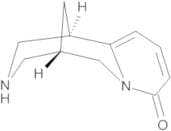
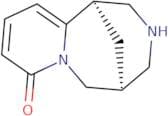
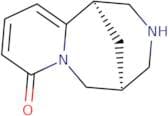
CAS 485-35-8
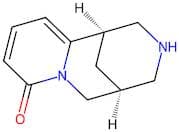
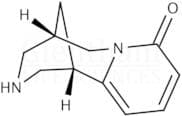
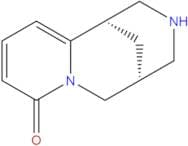
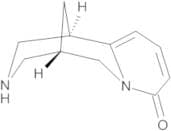
:Cytisine
- (1R,5S)-1,2,3,4,5,6-Hexahydro-1,5-methano-8H-pyrido[1,2-a][1,5]diazocin-8-one
- (1R,5S)-1,2,3,4,5,6-hexahydro-8H-1,5-methanopyrido[1,2-a][1,5]diazocin-8-one
- (1R,5S)-8-oxo-1,3,4,5,6,8-hexahydro-2H-1,5-methanopyrido[1,2-a][1,5]diazocin-3-ium
- 1,2,3,4,5,6-Hexahydro-1,5-methano-8H-pyrido[1,2-a][1,5]diazocin-8-one
- 1,2,3,4,5,6-Hexahydro-1,5-methano-pyrido[1,2-a][1,5]diazocin
- 1,5-Methano-8H-pyrido(1,2-a)(1,5)diazocin-8-one, 1,2,3,4,5,6-hexahydro-
- 1,5-Methano-8H-pyrido[1,2-a][1,5]diazocin-8-one, 1,2,3,4,5,6-hexahydro-, (1R)-
- 1,5-Methano-8H-pyrido[1,2-a][1,5]diazocin-8-one, 1,2,3,4,5,6-hexahydro-, (1R,5S)-
- 1,5-Methano-8H-pyrido[1,2-a][1,5]diazocin-8-one, 1,2,3,4,5,6-hexahydro-, (1R-cis)-
- 2-A)(1,5)Diazocin-8-One,1,2,3,4,5,6-Hexahydro-5-Methano-8H-Pyrido(1
- 5)Diazocin-8-One,1,2,3,4,5,6-Hexahydro-5-Methano-8H-Pyrido((1R)-2-A)(1
- Baptitoxin
- Baptitoxine
- Citisina
- Cytisin
- Cytisinicline
- Cytiton
- Cytitone
- Laburnin
- Sophorin
- Sophorine
- Tabex
- Tsitafat
- Ulexin
- Ulexine
- Cytisine
- (-)-cytisine
- See more synonyms
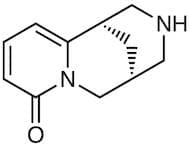
Cytisine
CAS:Cytisine analytical standard provided with chromatographic purity, to be used as reference material for qualitative determination.Formula:C11H14N2OPurity:(HPLC) ≥95%Color and Shape:PowderMolecular weight:190.24Cytisinicline
CAS:Cytisinicline (Sophorine), an alkaloid, is found naturally in several plants.Formula:C11H14N2OPurity:98% - 99.41%Color and Shape:Orthorhombic Prisms From Acetone Off-White To Tan Crystalline SolidMolecular weight:190.241,5-Methano-8H-pyrido[1,2-a][1,5]diazocin-8-one, 1,2,3,4,5,6-hexahydro-, (1R,5S)-
CAS:Formula:C11H14N2OPurity:95%Color and Shape:SolidMolecular weight:190.2417Ref: IN-DA0034OC
1kgTo inquire250gTo inquire500gTo inquire250mg24.00€1g40.00€5g99.00€10g141.00€25g197.00€Cytisine
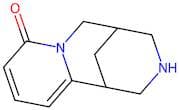
CAS:Formula:C11H14N2OPurity:≥ 98.0%Color and Shape:White to yellow powderMolecular weight:190.24(-)-Cytisine
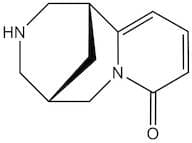
CAS:Formula:C11H14N2OPurity:>98.0%(GC)(T)Color and Shape:Light orange to Yellow to Green powder to crystalMolecular weight:190.25Cytisine
CAS:CytisineFormula:C11H14N2OPurity:98%Color and Shape: pale yellow solidMolecular weight:190.24g/molCytisine
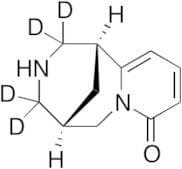
CAS:Natural alkaloidFormula:C11H14N2OPurity:≥ 98.0 % (HPLC)Color and Shape:CrystalsMolecular weight:190.25Cytisine-d4 (Major)
CAS:Controlled ProductApplications Isotope labelled Cytisine, toxic priniciple in seed of Laburnum anagyroides and other Leguminosae. A neuronal nicotinic acetylcholine agonist.
Not a dangerous good if item is equal to or less than 1g/ml and there is less than 100g/ml in the package
References Barlow, R.D., et al.: Brit. J. Pharmacol., 35, 161 (1969), Jensen, A.A., et al.: J. Med. Chem., 48, 15, 4705(2005),Formula:C11H10D4N2OColor and Shape:Light Yellow To BrownMolecular weight:194.27Cytisine
CAS:Controlled ProductApplications Toxic priniciple in seed of Laburnum anagyroides and other Leguminosae. A neuronal nicotinic acetylcholine agonist.
Not a dangerous good if item is equal to or less than 1g/ml and there is less than 100g/ml in the package
References Barlow, R.D., et al.: Brit. J. Pharmacol., 35, 161 (1969), Jensen, A.A., et al.: J. Med. Chem., 48, 15, 4705(2005),Formula:C11H14N2OColor and Shape:Off-WhiteMolecular weight:190.24Cytisine
CAS:Cytisine is an alkaloid found in plants of the Cytisus genus of the family Fabaceae. It is a partial agonist to α4β2 nicotinic acetylcholine receptors, which are implicated in the nicotine dependence. In Eastern Europe, it has been used for 50 years to aid smoking cessation.Formula:C11H14N2OPurity:Min. 95%Color and Shape:White PowderMolecular weight:190.24 g/molCytisine - Bio-X ™
CAS:Cytisine is an alkaloid found in plants derived from the Fabaceae family. It has partial agonist activity at the α4β2 nicotinic acetylcholine receptor used to aid smoking cessation. Recent studies have shown it to be a more effective smoking cessation treatment than nicotine replacement therapy.
Formula:C11H14N2OPurity:Min. 95%Color and Shape:PowderMolecular weight:190.24 g/mol
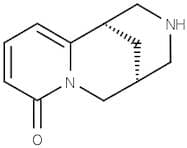

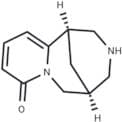

![1,5-Methano-8H-pyrido[1,2-a][1,5]diazocin-8-one, 1,2,3,4,5,6-hexahydro-, (1R,5S)-](/_next/image/?url=https%3A%2Fstatic.cymitquimica.com%2Fproducts%2FIN%2Fthumb%2FDA0034OC.jpg&w=3840&q=75)