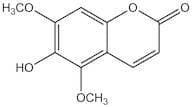
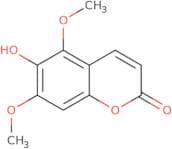
CAS 486-28-2
:Fraxinol
Description:
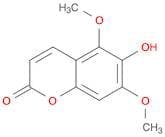
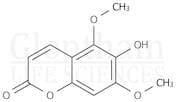
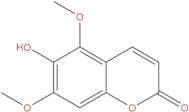
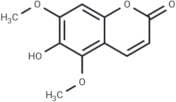
Fraxinol, with the CAS number 486-28-2, is a chemical compound classified as a phenolic compound. It is primarily derived from the ash tree (Fraxinus species) and is known for its role in various biological activities. Fraxinol exhibits antioxidant properties, which contribute to its potential health benefits, including anti-inflammatory and antimicrobial effects. The compound has a molecular structure characterized by a hydroxyl group attached to a benzene ring, which is typical of phenolic compounds, enhancing its reactivity and interaction with other biological molecules. Fraxinol is soluble in organic solvents but has limited solubility in water, which influences its bioavailability and application in various fields, including pharmaceuticals and natural product chemistry. Additionally, research into fraxinol's potential therapeutic applications continues, particularly in the context of its effects on cellular processes and its role in traditional medicine. Overall, fraxinol represents a significant compound of interest in both natural product chemistry and pharmacology.
Formula:C11H10O5
InChI:InChI=1S/C11H10O5/c1-14-8-5-7-6(3-4-9(12)16-7)11(15-2)10(8)13/h3-5,13H,1-2H3
InChI key:InChIKey=PBPNOAHYDPHKFH-UHFFFAOYSA-N
SMILES:O(C)C1=C2C(=CC(OC)=C1O)OC(=O)C=C2
Synonyms:- 2H-1-benzopyran-2-one, 6-hydroxy-5,7-dimethoxy-
- 5,7-Dimethoxy-6-hydroxycoumarin
- 6-Hydroxy-5,7-dimethoxy-2H-1-benzopyran-2-one
- 6-Hydroxy-5,7-dimethoxycoumarin
- Coumarin, 6-hydroxy-5,7-dimethoxy-
- Fraxinol
Sort by
Purity (%)
0
100
|
0
|
50
|
90
|
95
|
100
Found 7 products.
Fraxinol
CAS:Fraxinol, a metabolite, is derived from 5,7-dimethoxy-2H-chromen-2-one by CYP enzymes through aromatic hydroxylation.Formula:C11H10O5Purity:≥95%Color and Shape:SolidMolecular weight:222.19Fraxinol
CAS:LactoneFormula:C11H10O5Purity:≥ 98.0 % (HPLC)Color and Shape:PowderMolecular weight:222.2Fraxinol
CAS:Fraxinol is a natural lignan, which is a small class of polyphenols, derived from the inner bark of the Ash tree (Fraxinus species). Its primary action is believed to involve antioxidant and anti-inflammatory pathways, where it scavenages reactive oxygen species and modulates cytokine production. This activity suggests potential modulation of cellular oxidative stress responses, contributing to its therapeutic interest.
Purity:Min. 95%