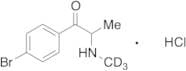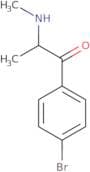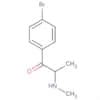
CAS 486459-03-4
:4-Bromomethcathinone
- 1-Propanone, 1-(4-bromophenyl)-2-(methylamino)-
- 4-Bromomethcathinone
- 1-(4-Bromophenyl)-2-(methylamino)-1-propanone
4-Bromomethcathinone-d3 Hydrochloride
CAS:Controlled ProductApplications 4-Bromomethcathinone-D3 hydrochloride is a labelled analogue of 4-Bromomethcathinone hydrochloride (B686080). 4-Bromomethcathinone is part of a family of synthetic cathinone compounds called aminopropiophenones (which have high potential for abuse). Aminopropiophenones have potential psychoactive effects, can lead to death, and are labelled as highly controlled substances in many countries.
References Foley, K. & Cozzi, N.: Drug Dev. Res., 60, 252 (2003); Mas-Morey, P., et al.: J. Pharm. Pract., 26, 353 (2013); Penders, T., et al.: Gen. Hosp. Psych., 34, 647 (2012); Spiller, H., et al.: Clin. Toxicol., 49, 499 (2011)Formula:C10H9BrD3NO·HClColor and Shape:NeatMolecular weight:281.592Dimethylphenidate
CAS:Controlled ProductDimethylphenidate is a psychostimulant drug that stimulates the central nervous system. It is a prodrug that is metabolized in the body to produce two active metabolites, amphetamine and methamphetamine. Dimethylphenidate binds to histamine H1 receptors and modulates the release of neurotransmitters such as dopamine and serotonin. The drug has been shown to have low uptake in rat brain tissue, which may be due to its ability to bind with high affinity to the serotonin transporter. This binding prevents uptake of serotonin from the synaptic cleft into presynaptic neurons by blocking membrane transporters responsible for transporting serotonin back into the neuron. Dimethylphenidate can also block dopamine reuptake by inhibiting dopamine transporter activity on dopamine-containing neurons in the brain, thereby increasing levels of extracellular dopamine.
Formula:C10H12BrNOPurity:Min. 95%Molecular weight:242.11 g/mol