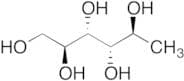
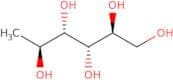
CAS 488-28-8
:L-Mannitol, 1-deoxy-
Description:
L-Mannitol, 1-deoxy- (CAS 488-28-8) is a sugar alcohol that belongs to the class of polyols, which are characterized by their multiple hydroxyl (-OH) groups. This compound is a stereoisomer of mannitol, differing in the configuration at one of its carbon atoms. L-Mannitol, 1-deoxy- is typically a white, crystalline solid that is soluble in water, making it useful in various applications, including pharmaceuticals and food products. It is known for its sweet taste, although it is less sweet than sucrose. The compound is often utilized as a sugar substitute and has applications in the medical field, particularly in osmotic diuretics and as a stabilizer for proteins and enzymes. Additionally, it exhibits low caloric value, making it suitable for low-calorie diets. Its safety profile is generally favorable, but like other sugar alcohols, it can cause gastrointestinal discomfort when consumed in large quantities. Overall, L-Mannitol, 1-deoxy- is valued for its functional properties in both food and pharmaceutical industries.
Formula:C6H14O5
Synonyms:- L-Mannitol, 1-deoxy-
Sort by
Purity (%)
0
100
|
0
|
50
|
90
|
95
|
100
Found 2 products.
L-Rhamnitol
CAS:Controlled ProductStability Hygroscopic
Applications L-Rhamnitol is a derivative of L-mannitol, used in the preparation of L-fructose and D-sorbose. It is also used in the production of D-Psicose (P839620) from allitol using oxidation of the microbe strain Enterobacter Aerogenes IK7.
References Dhawale, M. Carb. Res., 155, 262 (1986); Gullapalli, P. et al.: Biosci. Biotech. Biochem., 71, 3048 (2007);Formula:C6H14O5Color and Shape:NeatMolecular weight:166.171-Deoxy-L-mannitol
CAS:1-Deoxy-L-mannitol is an effective oral hypoglycemic agent that has been used in the treatment of diabetes. It is a sugar alcohol with a chemical structure similar to glucose and erythritol. 1-Deoxy-L-mannitol is absorbed by the small intestine and enters the bloodstream after being hydrolyzed by pancreatic enzymes. It inhibits fatty acid synthesis, which leads to decreased levels of acetyl coenzyme A and increased levels of carnitine, leading to activation of fatty acid oxidation in liver cells. This drug also inhibits phosphatase activity, which leads to decreased production of glycerophosphate from triphosphate. This process results in an increase in intracellular pH and a decrease in plasma glucose concentration. The use of 1-deoxy-L-mannitol for the treatment of diabetes was first reported by George Cahill and his colleagues at Harvard University in 1967. It was shown that this drug could reduce blood sugarFormula:C6H14O5Purity:Min. 95%Color and Shape:PowderMolecular weight:166.17 g/mol