CymitQuimica logo

CAS 488-31-3

:

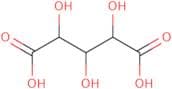
Pentaric acid

Description:
Pentaric acid, with the CAS number 488-31-3, is a dicarboxylic acid characterized by its five-carbon chain structure, featuring two carboxylic acid functional groups (-COOH) at each end. This compound is typically a white crystalline solid at room temperature and is soluble in water, which is a common trait among dicarboxylic acids. Pentaric acid is known for its potential applications in organic synthesis and as a building block in the production of various chemical compounds. Its molecular structure allows for the formation of esters and amides, making it useful in the development of polymers and other materials. Additionally, it exhibits typical acid properties, such as the ability to donate protons in solution, which can influence its reactivity and interactions with other substances. The presence of multiple functional groups also allows for diverse chemical modifications, enhancing its utility in various chemical processes. Overall, pentaric acid is a versatile compound with significant relevance in both industrial and research settings.
Formula:C5H8O7
InChI:InChI=1S/C5H8O7/c6-1(2(7)4(9)10)3(8)5(11)12/h1-3,6-8H,(H,9,10)(H,11,12)
InChI key:InChIKey=NPTTZSYLTYJCPR-UHFFFAOYSA-N
SMILES:C(C(C(O)=O)O)(C(C(O)=O)O)O
Synonyms:
  • Glutaric acid, 2,3,4-trihydroxy-
  • 2,3,4-Trihydroxyglutaric acid
  • Glutaric acid, α,β,γ-trihydroxy-
  • Pentaric acid
  • Trihydroxyglutaric acid
Sort by

Purity (%)
0
100
|
0
|
50
|
90
|
95
|
100
Found 1 products.
  • Pentaric acid

    CAS:
    <p>Pentaric acid is a crystalline, monocarboxylic acid with a hydroxyl group. It is used as an inhibitor of corrosion in metal and as a disinfectant. Pentaric acid can be found in urine samples and has been shown to be an effective inhibitor of the enzymatic reaction that produces azobenzene, which is associated with the development of bladder cancer. This compound also inhibits the growth of bacteria. Pentaric acid is used as an additive in some detergents and soaps because it can inhibit the growth of bacteria on surfaces. <br>Pentaric acid was first synthesized by German chemist Otto Wohlert in 1834. Hydrogen ions are released when pentaric acid dissolves in water, lowering the pH level and causing corrosion to metal surfaces. The corrosion inhibition properties of pentaric acid have been known since its discovery, but its anti-bacterial properties were not discovered until recently when researchers found that pentar</p>
    Formula:C5H8O7
    Purity:Min. 95%
    Molecular weight:180.11 g/mol

    Ref: 3D-MP153474

    1g
    2,440.00€