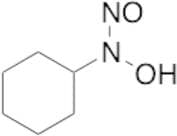
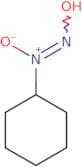
CAS 4883-72-1
:Cyclohexanamine,N-hydroxy-N-nitroso-
- Hydroxylamine,N-cyclohexyl-N-nitroso- (6CI,7CI,8CI)
- Cupferron, hexahydro-
- Hexahydrocupferron
- N-Cyclohexyl-N-nitrosohydroxylamine
- N-Nitroso-N-cyclohexylhydroxylamine
- N-Nitrosocyclohexylhydroxylamine
N-Nitroso N-Hydroxy Cyclohexanamine
CAS:Controlled ProductFormula:C6H12N2O2Color and Shape:NeatMolecular weight:144.172N-Nitroso N-hydroxy cyclohexanamine
CAS:N-Nitroso N-hydroxy cyclohexanamine is an analog of betamethasone and a potent inhibitor of kinases. It has been shown to have anticancer properties by inducing apoptosis in cancer cells. This compound is excreted in urine and has been studied extensively in Chinese populations for its potential as an anticancer agent. N-Nitroso N-hydroxy cyclohexanamine inhibits the activity of kinases, which are important enzymes involved in cell signaling pathways that regulate cell growth and division. This inhibition leads to the suppression of tumor growth and the induction of apoptosis in cancer cells. Additionally, this compound has been found to be a potent inhibitor of vitamin D receptor (VDR) and may play a role in regulating VDR-mediated gene expression.
Formula:C6H12N2O2Purity:Min. 95%Molecular weight:144.17 g/mol