CAS 489-33-8
:Limocitrin
Description:
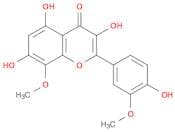
Limocitrin, with the CAS number 489-33-8, is a chemical compound classified as a flavonoid, specifically a flavanone. It is primarily found in citrus fruits and is known for its potential health benefits, including antioxidant properties. Limocitrin exhibits a yellow to orange color, which is characteristic of many flavonoids, and it is soluble in organic solvents but has limited solubility in water. This compound is of interest in both food science and pharmacology due to its ability to scavenge free radicals, which may contribute to its protective effects against oxidative stress. Additionally, limocitrin may play a role in the flavor and aroma profiles of citrus products, enhancing their sensory qualities. Research into its biological activities is ongoing, with studies exploring its potential anti-inflammatory and anticancer properties. Overall, limocitrin represents a significant area of interest in natural product chemistry and its applications in health and nutrition.
Formula:C17H14O8
InChI:InChI=1S/C17H14O8/c1-23-11-5-7(3-4-8(11)18)15-14(22)13(21)12-9(19)6-10(20)16(24-2)17(12)25-15/h3-6,18-20,22H,1-2H3
InChI key:InChIKey=IBXCKSUZOFKGSB-UHFFFAOYSA-N
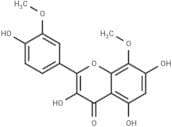
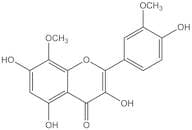
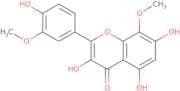
SMILES:O(C)C1=C2C(C(=O)C(O)=C(O2)C3=CC(OC)=C(O)C=C3)=C(O)C=C1O
Synonyms:- Limocitrin
- 3,5,7-Trihydroxy-2-(4-hydroxy-3-methoxyphenyl)-8-methoxy-4H-1-benzopyran-4-one
- Flavone, 3,4′,5,7-tetrahydroxy-3′,8-dimethoxy-
- 8-Methoxyisorhamnetin
- 4H-1-Benzopyran-4-one, 3,5,7-trihydroxy-2-(4-hydroxy-3-methoxyphenyl)-8-methoxy-
Sort by
Purity (%)
0
100
|
0
|
50
|
90
|
95
|
100
Found 4 products.
Limocitrin
CAS:Limocitrin is a constituent of citrus fruit peels, belongs to the family of Flavonols.Formula:C17H14O8Purity:98%Color and Shape:SolidMolecular weight:346.29Limocitrin
CAS:Oxygen-heterocyclic compoundFormula:C17H14O8Purity:≥ 98.0 % (HPLC)Color and Shape:PowderMolecular weight:346.29Limocitrin
CAS:Limocitrin is a flavonoid compound, which is a naturally occurring plant secondary metabolite. Flavonoids are widely distributed in the plant kingdom and are known for their diverse biological activities. Limocitrin, specifically, has been isolated from various plant sources, including certain fruits and flowers. Its mode of action involves interacting with cellular signaling pathways, affecting processes such as oxidative stress response and gene expression regulation.Purity:Min. 95%