


CAS 4906-68-7
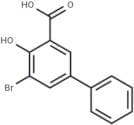
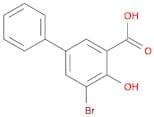
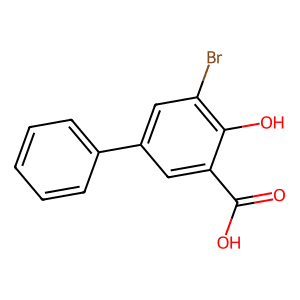
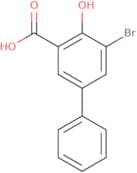
:5-bromo-4-hydroxybiphenyl-3-carboxylic acid
- [1,1'-Biphenyl]-3-Carboxylic Acid, 5-Bromo-4-Hydroxy-
AKR1C1-IN-1
CAS:AKR1C1-IN-1 is a human 20α-hydroxysteroid dehydrogenase (AKR1C1) inhibitor (Ki: 4 nM for AKR1C1).Formula:C13H9BrO3Purity:98.62% - 99.44%Color and Shape:SolidMolecular weight:293.123-bromo-5-phenyl Salicylic Acid
CAS:Formula:C13H9BrO3Purity:98%Color and Shape:SolidMolecular weight:293.1128AKR1C1 Inhibitor, 5-PBSA
CAS:AKR1C1 Inhibitor, 5-PBSA is a potent ATP-binding cassette transporter inhibitor. It has been shown to potently inhibit the ATP binding cassette transporter 1 (AKR1C1) in vitro and in vivo. AKR1C1 Inhibitor, 5-PBSA also inhibits the acetylation of lysine residues on histones H2B and H3 in sk-n-sh cells, which causes an inhibition of autophagy and apoptosis. This drug also has a reactive group that can be used to attach it to other compounds for targeted delivery. AKR1C1 Inhibitor, 5-PBSA has been shown to inhibit tumor growth by inhibiting tumor cell proliferation due to its ability to induce apoptosis. Chronic exposure of this drug will lead to matrix metalloproteinase degradation of collagen fibers in the extracellular matrix and an increased expression of lysine residues on histones H2B and H
Formula:C13H9BrO3Purity:Min. 95%Color and Shape:PowderMolecular weight:293.11 g/mol5-Bromo-4-hydroxy-[1,1′-biphenyl]-3-carboxylic acid
CAS:Formula:C13H9BrO3Purity:≥98%Molecular weight:293.116




![5-Bromo-4-hydroxy-[1,1′-biphenyl]-3-carboxylic acid](/_next/image/?url=https%3A%2Fstatic.cymitquimica.com%2Fproducts%2F10%2Fthumb%2FF547742.jpg&w=3840&q=75)
