CAS 491-11-2
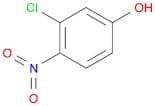
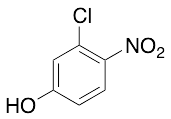
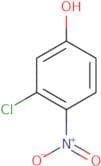
:3-Chloro-4-nitrophenol
Description:
3-Chloro-4-nitrophenol, with the CAS number 491-11-2, is an organic compound that features both a chlorine and a nitro group attached to a phenolic ring. This compound is characterized by its pale yellow crystalline solid form and has a molecular formula of C6H4ClN O3. It exhibits a melting point that typically falls within a specific range, indicating its solid state under standard conditions. The presence of the chlorine and nitro groups contributes to its reactivity and makes it a useful intermediate in organic synthesis, particularly in the production of dyes, pharmaceuticals, and agrochemicals. 3-Chloro-4-nitrophenol is also known for its potential environmental impact and toxicity, necessitating careful handling and disposal. Its solubility in organic solvents, along with limited solubility in water, reflects its hydrophobic nature. Additionally, it can undergo various chemical reactions, including nucleophilic substitutions and reductions, making it a versatile compound in chemical research and industrial applications.
Formula:C6H4ClNO3
InChI:InChI=1/C6H4ClNO3/c7-5-3-4(9)1-2-6(5)8(10)11/h1-3,9H
InChI key:InChIKey=DKTRZBWXGOPYIX-UHFFFAOYSA-N
SMILES:N(=O)(=O)C1=C(Cl)C=C(O)C=C1
Synonyms:- 2-Chloro-4-hydroxynitrobenzene
- 3-Chlor-4-nitrobenzolol
- Phenol, 3-Chloro-4-Nitro-
- 3-Chloro-4-nitrophenol
- 3-Chlor-4-nitrophenol
- 3-chloro-4-nitrophenol CAS NO.491-11-2
Sort by
Purity (%)
0
100
|
0
|
50
|
90
|
95
|
100
Found 6 products.
3-Chloro-4-nitrophenol
CAS:Controlled ProductApplications 3-Chloro-4-nitrophenol was used as a reactant in the synthetic preparation of highly potent BTK and JAK3 dual inhibitors and it may also have antifungal activity.
References Ge, Yang, et al.: Euro. J. of Med. Chem., 143, 1847-1857 (2018); Gershon, H., et al.: Monatshefte fuer Chemie, 126(10), 1161-6 (1995)Formula:C6H4ClNO3Color and Shape:BeigeMolecular weight:173.553-Chloro-4-nitrophenol
CAS:3-Chloro-4-nitrophenol is a product of the reaction between resorcinol and dimethylaminopyridine in chloroform. It can be used as an acid binding agent, which is a type of compound that binds to acid pollutants in water. 3-Chloro-4-nitrophenol reacts with chloride ions to form the salt 3-chloro-4-nitrobenzoate, which can be easily removed from water by precipitation with sodium or potassium benzoate. The process begins by adding sodium ethoxide to a solution of 3CNP in methylene chloride. This creates an esterification reaction, which yields 3CNP and ethyl benzoate, a liquid that can be separated from the organic solvent. The organic solvent can then be evaporated under vacuum to leave behind 3CNP crystals.Formula:C6H4ClNO3Purity:Min. 95%Color and Shape:PowderMolecular weight:173.55 g/mol