CAS 491-38-3
:Chromone
Description:
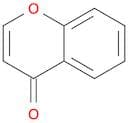
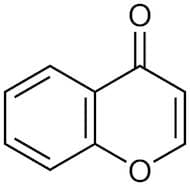
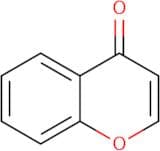
Chromone, with the CAS number 491-38-3, is a bicyclic organic compound characterized by a fused benzene and pyrone ring structure. It is a colorless to pale yellow solid that is soluble in organic solvents but has limited solubility in water. Chromone exhibits a range of interesting chemical properties, including the ability to undergo various reactions such as electrophilic substitution and nucleophilic addition due to the presence of the carbonyl group in the pyrone ring. This compound is known for its biological activities, including anti-inflammatory, antioxidant, and antimicrobial properties, making it of interest in pharmaceutical research. Additionally, chromone derivatives are often studied for their potential applications in the development of dyes, agrochemicals, and as fluorescent probes in biochemical assays. The compound's structure allows for the modification of its properties, leading to a diverse array of derivatives with tailored functionalities. Overall, chromone serves as an important scaffold in organic chemistry and medicinal chemistry.
Formula:C9H6O2
InChI:InChI=1S/C9H6O2/c10-8-5-6-11-9-4-2-1-3-7(8)9/h1-6H
InChI key:InChIKey=OTAFHZMPRISVEM-UHFFFAOYSA-N
SMILES:O=C1C=2C(OC=C1)=CC=CC2
Synonyms:- 2,3-Benzo-4-pyrone
- 4H-1-Benzopyran-4-one
- 4H-benzo(b)pyran-4-one
- 4H-chromen-4-one
- Benzo-γ-pyrone
- Chromone
Sort by
Purity (%)
0
100
|
0
|
50
|
90
|
95
|
100
Found 5 products.
Chromone
CAS:Formula:C9H6O2Purity:>98.0%(GC)Color and Shape:White to Light yellow powder to crystalMolecular weight:146.15Chromone
CAS:Chromone is a natural compound that is extracted from the roots of Cimicifuga foetida. It has been shown to have inhibitory properties against various enzymes and has antiinflammatory activity. Chromone also inhibits the production of prostaglandins, which are inflammatory mediators. This compound has been shown to be cytotoxic in biological studies using cultured cells and may be a potential agent for the treatment of infectious diseases. The chromone molecule contains a pyrazole ring and coumarin derivatives, which are responsible for its inhibitory properties against various enzymes.
Formula:C9H6O2Purity:Min. 95%Color and Shape:White PowderMolecular weight:146.14 g/mol