CAS 491-71-4
:Chrysoeriol
Description:
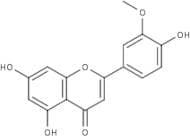
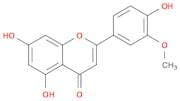
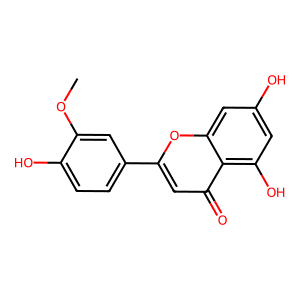
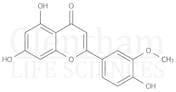
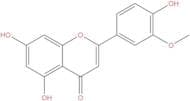
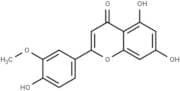
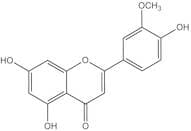
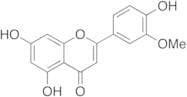
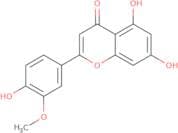
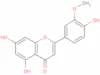
Chrysoeriol, with the CAS number 491-71-4, is a naturally occurring flavonoid belonging to the flavone class. It is characterized by its yellow pigment and is commonly found in various plants, particularly in the leaves and flowers of certain species. Chrysoeriol exhibits antioxidant properties, which contribute to its potential health benefits, including anti-inflammatory and anticancer effects. The compound has a molecular formula that reflects its structure, which includes multiple hydroxyl groups that enhance its reactivity and solubility in polar solvents. Chrysoeriol is also known for its role in plant pigmentation and may contribute to the color of certain fruits and flowers. In addition to its biological activities, it has garnered interest in food and pharmaceutical industries for its potential applications. Overall, chrysoeriol is a significant compound in both natural product chemistry and medicinal research, highlighting the importance of flavonoids in health and nutrition.
Formula:C16H12O6
InChI:InChI=1S/C16H12O6/c1-21-14-4-8(2-3-10(14)18)13-7-12(20)16-11(19)5-9(17)6-15(16)22-13/h2-7,17-19H,1H3
InChI key:InChIKey=SCZVLDHREVKTSH-UHFFFAOYSA-N
SMILES:O=C1C=2C(OC(=C1)C3=CC(OC)=C(O)C=C3)=CC(O)=CC2O
Synonyms:- 3'-Methoxyapigenin
- 3'-O-Methyluteolin
- 3′-Methoxy-4′,5,7-trihydroxyflavone
- 3′-O-Methylluteolin
- 4',5,7-Trihydroxy-3'-Methoxyflavone
- 4H-1-Benzopyran-4-one, 5,7-dihydroxy-2-(4-hydroxy-3-methoxyphenyl)-
- 5,7,4′-Trihydroxy-3′-methoxyflavone
- 5,7-Dihydroxy-2-(4-hydroxy-3-methoxyphenyl)-4H-1-benzopyran-4-one
- 5,7-dihydroxy-2-(4-hydroxy-3-methoxyphenyl)-4H-chromen-4-one
- Brn 0295004
- Chryseriol
- Chrysoeriol
- Chrysoriol
- Flavone, 4',5,7-trihydroxy-3'-methoxy-
- Flavone, 4′,5,7-trihydroxy-3′-methoxy-
- Luteolin 3'-methyl ether
- 5-18-05-00296 (Beilstein Handbook Reference)
- See more synonyms
Sort by
Purity (%)
0
100
|
0
|
50
|
90
|
95
|
100
Found 11 products.
Chrysoeriol
CAS:Chrysoeriol analytical standard provided with w/w absolute assay, to be used for quantitative titration.Formula:C16H12O6Purity:(HPLC) ≥99%Color and Shape:PowderMolecular weight:300.28Chrysoeriol
CAS:Chrysoeriol has antioxidant, antiinflammatory, antitumor, antimicrobial, antiviral, and free radical scavenging activities, it also shows selectiveFormula:C16H12O6Purity:97.32% - 99.805%Color and Shape:SolidMolecular weight:300.26Chrysoeriol
CAS:Oxygen-heterocyclic compoundFormula:C16H12O6Purity:≥ 90.0 % (HPLC)Color and Shape:PowderMolecular weight:300.26Chrysoeriol (>90%)
CAS:Controlled ProductApplications Chrysoeriol is a methoxyflavonoid that selectively inhibits the formation of a carcinogenic estrogen metabolite in MCF-7 breast cancer cells. A metabolite of Luteolin (L475000).
References Takemura, H. et al.: J. Steroid Biochem. Mol. Biol., 118, 70 (2010); Petroianu, G. et al.: Open Med. Chem. J., 3, 1 (2009); Takemura, H. et al.: Toxicology, 274, 42 (2010);Formula:C16H12O6Purity:>90%Color and Shape:NeatMolecular weight:300.26Chrysoeriol
CAS:Chrysoeriol is a flavonoid compound, which is derived from various plant sources, including many herbs and flowers such as chamomile and tarragon. It functions through inhibition of certain cellular pathways that lead to inflammation, such as the suppression of NF-kB and cyclooxygenase activity. Additionally, chrysoeriol exhibits antioxidative effects by scavenging free radicals and enhancing the body's natural antioxidant enzyme systems.Formula:C16H12O6Purity:Min. 95%Color and Shape:Yellow PowderMolecular weight:300.26 g/mol