CAS 4912-58-7
:3-Ethoxy-4-hydroxybenzyl alcohol
Description:
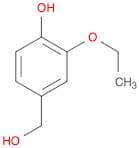
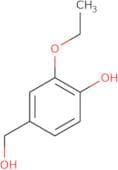
3-Ethoxy-4-hydroxybenzyl alcohol, with the CAS number 4912-58-7, is an organic compound characterized by its aromatic structure, which includes a benzene ring substituted with both an ethoxy group and a hydroxy group. This compound typically appears as a colorless to pale yellow liquid or solid, depending on its purity and form. It is soluble in organic solvents and exhibits moderate solubility in water due to the presence of the hydroxy group, which can engage in hydrogen bonding. The ethoxy group contributes to its hydrophobic characteristics, while the hydroxy group enhances its reactivity and potential for forming hydrogen bonds. This compound may be utilized in various applications, including as an intermediate in organic synthesis, in the formulation of pharmaceuticals, or as a potential antioxidant due to its phenolic structure. Its properties, such as melting point, boiling point, and specific reactivity, can vary based on the conditions and purity of the substance. Safety data should be consulted for handling and storage guidelines.
Formula:C9H12O3
InChI:InChI=1/C9H12O3/c1-2-12-9-5-7(6-10)3-4-8(9)11/h3-5,10-11H,2,6H2,1H3
InChI key:InChIKey=ULCZGZGLABEWDG-UHFFFAOYSA-N
SMILES:O(CC)C1=CC(CO)=CC=C1O
Synonyms:- 2-Ethoxy-4-(Hydroxymethyl)Phenol
- 3-Ethoxy-4-hydroxybenzenemethanol
- Benzenemethanol, 3-ethoxy-4-hydroxy-
- Benzyl alcohol, 3-ethoxy-4-hydroxy-
- Ethyl vanillyl alcohol
- p-(Hydroxymethyl)guethol
- 3-Ethoxy-4-hydroxybenzyl alcohol
- RARECHEM AL BD 0103
Sort by
Purity (%)
0
100
|
0
|
50
|
90
|
95
|
100
Found 2 products.
2-Ethoxy-4-(hydroxymethyl)phenol
CAS:Formula:C9H12O3Purity:96%Color and Shape:SolidMolecular weight:168.18983-Ethoxy-4-hydroxybenzyl alcohol
CAS:3-Ethoxy-4-hydroxybenzyl alcohol (EHBA) is a functional gene that has been shown to have anti-oxidant properties. EHBA is capable of scavenging free radicals and reactive oxygen species, and is therefore thought to be a potential treatment for diseases caused by peroxide and aldehydes. It has also been shown to reduce the production of vanillyl alcohol, which is associated with pain in tissues such as the trigeminal nerve. The anti-oxidant properties of EHBA are thought to be due to its ability to inhibit lipid peroxidation, protein oxidation, and DNA damage. EHBA can be administered orally or topically.Formula:C9H12O3Purity:Min. 95%Color and Shape:PowderMolecular weight:168.19 g/mol