CAS 492-73-9
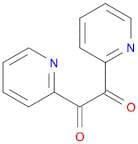
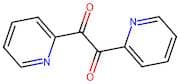
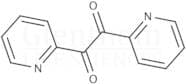
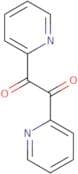
:2,2′-Pyridil
Description:
2,2′-Pyridil, also known as 2,2'-bipyridine, is an organic compound characterized by its bipyridine structure, which consists of two pyridine rings connected by a single bond. This compound is typically a colorless to pale yellow solid at room temperature and is soluble in organic solvents such as ethanol and acetone. It exhibits a melting point that varies depending on purity and specific conditions. 2,2′-Pyridil is notable for its ability to act as a bidentate ligand, forming stable complexes with various metal ions, which makes it valuable in coordination chemistry and catalysis. The compound also has applications in organic synthesis and materials science, particularly in the development of sensors and electrochemical devices. Its chemical properties include the ability to undergo various reactions, such as oxidation and substitution, making it a versatile building block in organic chemistry. Safety precautions should be observed when handling this compound, as it may pose health risks if ingested or inhaled.
Formula:C12H8N2O2
InChI:InChI=1S/C12H8N2O2/c15-11(9-5-1-3-7-13-9)12(16)10-6-2-4-8-14-10/h1-8H
InChI key:InChIKey=PIINXYKJQGMIOZ-UHFFFAOYSA-N
SMILES:C(C(=O)C1=CC=CC=N1)(=O)C2=CC=CC=N2
Synonyms:- 1,2-Bis(2-pyridinyl)-1,2-ethanedione
- 1,2-Bis(2-pyridyl)-1,2-ethanedione
- 1,2-Di(Pyridin-2-Yl)Ethane-1,2-Dione
- 1,2-Di-2-pyridinyl-1,2-ethanedione
- 1,2-Ethanedione, 1,2-di-2-pyridinyl-
- 2,2′-Dipyridylglyoxal
- Bipicolinoyl
- Bis(2-pyridyl)ethanedione
- Di-2-pyridyldiketone
- Di-2-pyridylethanedione
- Di-2-pyridylglyoxal
- Ethanedione, di-2-pyridinyl-
- Glyoxal, di-2-pyridyl-
- NSC 16545
- See more synonyms
Sort by
Purity (%)
0
100
|
0
|
50
|
90
|
95
|
100
Found 5 products.
2,2²-Pyridil
CAS:2,2-Pyridil is a synthetic compound that forms a hydrated proton. This compound has been shown to have emissions at 272 nm and thermal expansion of 0.038 mm/(m·K). The nitrogen atoms in this molecule are bonded to two chlorine atoms. 2,2-Pyridil can undergo nucleophilic attack by chloride ions or form hydrogen bonds with other molecules due to the lone pair of electrons on the carbon atom. This molecule also has three carbon tetrachloride molecules attached to it. The isolated yield for this compound is about 50%.Formula:C12H8N2O2Purity:Min. 95%Molecular weight:212.2 g/mol