CAS 495-18-1
:Benzohydroxamic acid
Description:
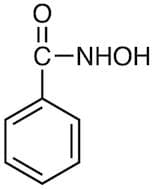
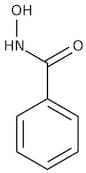
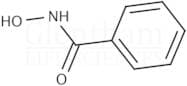
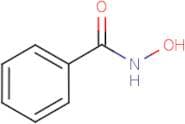
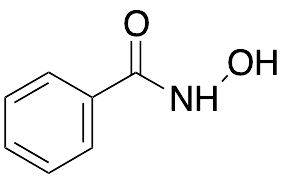
Benzohydroxamic acid, with the CAS number 495-18-1, is an organic compound characterized by the presence of both a hydroxamic acid functional group and a benzene ring. It typically appears as a white to off-white crystalline solid and is soluble in polar solvents such as water and alcohols. The compound features a hydroxylamine moiety (-NHOH) attached to a benzoyl group, which contributes to its reactivity and potential applications. Benzohydroxamic acid is known for its ability to chelate metal ions, making it useful in various fields, including analytical chemistry and biochemistry. It has been studied for its potential as an inhibitor of certain enzymes, particularly in the context of drug development and therapeutic applications. Additionally, it exhibits properties that may be leveraged in the synthesis of other chemical compounds. As with many organic acids, it should be handled with care, as it can be irritant to skin and eyes. Proper safety protocols should be followed when working with this substance.
Formula:C7H7NO2
InChI:InChI=1S/C7H7NO2/c9-7(8-10)6-4-2-1-3-5-6/h1-5,10H,(H,8,9)
InChI key:InChIKey=VDEUYMSGMPQMIK-UHFFFAOYSA-N
SMILES:C(NO)(=O)C1=CC=CC=C1
Synonyms:- Benzamide, N-hydroxy-
- Benzenehydroxamic acid
- Benzhydroxamic acid
- Benzohydroximic acid
- Benzoylhydroxylamine
- Bham
- Brd 3493
- Hydroxybenzamide, n-
- Hydroxylamine, N-benzoyl-
- N-Benzohydroxamic acid
- N-Benzoylhydroxylamine
- N-Hydroxybenzamid
- N-hidroxibenzamida
- N-hydroxybenzamide
- Nsc 147248
- Nsc 3136
- Phenylhydroxamic acid
- See more synonyms
Sort by
Purity (%)
0
100
|
0
|
50
|
90
|
95
|
100
Found 13 products.
Benzohydroxamic Acid
CAS:Formula:C7H7NO2Purity:>98.0%(T)Color and Shape:White to Almost white powder to crystalMolecular weight:137.14Benzohydroxamic acid, 98%
CAS:Benzhydroxamic acid is used as precursor in the synthesis of novel mono-anionic and di-anionic hydroxamato complexes by reacting with BiPh3 and Bi(O(t)Bu)3, which has anti-bacterial activity against helicobacter pylori. It is used in the photometric determination of trace amounts of vanadium in alloFormula:C7H7NO2Purity:98%Color and Shape:White or pink to pale brown, Crystalline powder or flakesMolecular weight:137.14Benzhydroxamic acid
CAS:Formula:C7H7NO2Purity:≥ 98.0%Color and Shape:White to light yellow crystalline powderMolecular weight:137.14Benzohydroxamic Acid
CAS:Controlled ProductStability Moisture and Temperature Sensitive
Applications Benzohydroxamic Acid (cas# 495-18-1) is a compound useful in organic synthesis.
References Siliphaivanh, P., et al.: Bioorg. Med. Chem. Lett., 17, 4619 (2007), Serafimova, R., et al.: Chem. Res. Toxicol., 20, 1225 (2007), Fielding, A., et al.: Biochem., 47, 9781 (2008),Formula:C7H7NO2Color and Shape:White To BeigeMolecular weight:137.14Benzohydroxamic acid
CAS:Benzohydroxamic acid is a weak organic acid that is formed from the condensation of two molecules of benzoic acid. The thermodynamic data for this compound are available in the form of an equation and an enthalpy change. Benzohydroxamic acid interacts with metal hydroxides by forming metal complexes, which can be used as catalysts in transfer reactions. In addition, benzohydroxamic acid has been shown to inhibit HIV infection by inhibiting reverse transcriptase activity. This compound also undergoes hydrogen bonding interactions with other molecules due to its hydroxyl group and fatty acid moieties.Formula:C7H7NO2Purity:Min. 95%Color and Shape:PowderMolecular weight:137.14 g/molBenzohydroxamic Acid extrapure, 99%
CAS:Formula:C7H7NO2Purity:min. 99%Color and Shape:White, Crystalline powder, Clear, ColourlessMolecular weight:137.14Benzohydroxamic acid
CAS:Benzohydroxamic acid (BHA) is a chitin deacetylase (CDA) inhibitor with notable antifungal properties. It displays Ki values of 8.31 μM against Verticillium dahliae CDA and 9.83 μM against Puccinia striiformis f. sp. tritici CDA. BHA can restore the defense responses in infected host plants by upregulating the expression of defense-related genes, thereby reducing fungal growth and proliferation within the plants. It is applicable in the research of agricultural fungal diseases, such as cotton wilt and wheat stripe rust, caused by pathogens like Verticillium dahliae and Puccinia striiformis.Formula:C7H7NO2Color and Shape:SolidMolecular weight:137.136Benzhydroxamic acid
CAS:Formula:C6H5CONHOHPurity:99.0 min. %Color and Shape:White solidMolecular weight:137.14