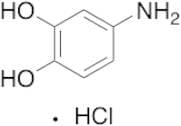
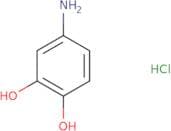
CAS 4956-56-3
:1,2-Benzenediol,4-amino-, hydrochloride (1:1)
- 1,2-Benzenediol,4-amino-, hydrochloride (9CI)
- Pyrocatechol, 4-amino-, hydrochloride(6CI,7CI,8CI)
- 3,4-Dihydroxyaniline hydrochloride
4-Aminocatechol Hydrochloride
CAS:Controlled ProductApplications 4-Aminocatechol Hydrochloride is an acidic salt form of 4-Aminocatechol (A603280). 4-Aminocatechol is a phenol derivative with inhibitory activity against matrix metalloproteinase (MMP).
References Rubino, M.T. et al.: Arch. Pharm., 344, 557 (2011);Formula:C6H7NO2•(HCl)Color and Shape:NeatMolecular weight:125.1336464-Aminobenzene-1,2-diol hydrochloride
CAS:4-Aminobenzene-1,2-diol hydrochloride (4ABAH) is a cox-2 inhibitor that has been shown to inhibit the activity of human cell factor and x-ray diffraction data. It has also been shown to possess anti-inflammatory properties by inhibiting the production of prostaglandins. The prodrug ester hydrochloride is converted to 4ABAH in vivo and undergoes hydrolysis by esterases to release 4ABAH. This conversion may be limited by the rate constant, which may decrease with time due to enzyme inactivation or competition with other substrates. 4ABAH inhibits cell proliferation in carcinoma cell lines, but not in normal cells. The drug is water soluble and therefore can be administered orally or intravenously.
Formula:C6H8ClNO2Purity:Min. 95%Molecular weight:161.58 g/mol