CAS 4958-39-8
:adenosine 3-monophosphate sodium*from yeast
Description:
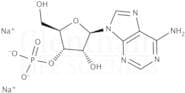
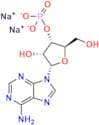
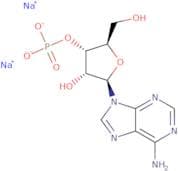
Adenosine 3-monophosphate sodium, commonly referred to as AMP sodium, is a nucleotide that plays a crucial role in cellular metabolism and signaling. It is a derivative of adenosine and consists of an adenine base, a ribose sugar, and a single phosphate group. The sodium salt form enhances its solubility in aqueous solutions, making it useful in various biochemical applications. AMP is involved in energy transfer, as it can be converted to ATP (adenosine triphosphate) through phosphorylation processes. In yeast, AMP is integral to metabolic pathways, including those related to fermentation and energy production. The compound is typically a white to off-white powder and is hygroscopic, meaning it can absorb moisture from the air. Its stability is influenced by pH and temperature, and it is sensitive to hydrolysis, which can lead to the breakdown of the nucleotide. Due to its biological significance, AMP sodium is often utilized in research, particularly in studies related to cellular signaling and metabolic regulation.
Formula:C10H14N5NaO7P
InChI:InChI=1/C10H14N5O7P.Na/c11-8-5-9(13-2-12-8)15(3-14-5)10-6(17)7(4(1-16)21-10)22-23(18,19)20;/h2-4,6-7,10,16-17H,1H2,(H2,11,12,13)(H2,18,19,20);
SMILES:C(C1C(C(C(n2cnc3c(N)ncnc23)O1)O)OP(=O)(O)O)O.[Na]
Synonyms:- 9H-purin-6-amine, 9-(3-O-phosphonopentofuranosyl)-, monosodium salt
- Adenosine-3'-monophosphate,sodium salt
Sort by
Purity (%)
0
100
|
0
|
50
|
90
|
95
|
100
Found 5 products.
Adenosine-3′-monophosphate sodium salt
CAS:Formula:C10H12N5Na2O7PPurity:99.0%Molecular weight:391.187Adenosine 3'-monophosphate sodium
CAS:Adenosine 3'-monophosphate sodium is a nucleotide that is used as a substrate for enzymes. It has been shown to increase the enzymatic activity of papaverine, litoralis, subtilis, and histidine phosphatase. Adenosine 3'-monophosphate sodium also has protease activity, which can be activated by adding an enzyme preparation containing subtilisin and trypsin. This compound also has a pH optimum of 8.0-9.5 and is active at an alkaline pH of 9.5-10.5. The specific strain of bacteria will determine the optimal pH range for activity, with enterobacter bacterial strains having a maximum range of 6-7 and brevibacterium bacteria strains having a range of 4-6.Formula:C10H12N5O7PNa2Purity:Min. 95%Color and Shape:White To Off-White SolidMolecular weight:391.19 g/mol