CAS 49678-02-6
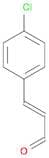
:p-Chlorocinnamaldehyde
Description:
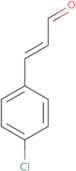
p-Chlorocinnamaldehyde, with the CAS number 49678-02-6, is an organic compound characterized by its aromatic structure and functional groups. It features a chlorinated phenyl group attached to a trans-alkene chain, culminating in an aldehyde functional group. This compound typically appears as a yellowish to brown liquid with a distinctive odor, reminiscent of cinnamon. It is known for its role in organic synthesis and as a potential flavoring agent due to its aromatic properties. p-Chlorocinnamaldehyde exhibits moderate solubility in organic solvents, while its solubility in water is limited. The compound is also recognized for its biological activity, including antimicrobial and antifungal properties, making it of interest in pharmaceutical and agricultural applications. Additionally, it can undergo various chemical reactions, such as oxidation and reduction, which are important for its utility in synthetic organic chemistry. Safety precautions should be observed when handling this compound, as it may cause irritation to the skin and eyes.
Formula:C9H7ClO
InChI:InChI=1/C9H7ClO/c10-9-5-3-8(4-6-9)2-1-7-11/h1-7H/b2-1+
Synonyms:- (2E)-3-(4-Chlorophenyl)acrylaldehyde
- (2E)-3-(4-Chlorophenyl)prop-2-enal
- (2E)-3-(4-Chlorphenyl)prop-2-enal
- 2-propenal, 3-(4-chlorophenyl)-, (2E)-
- 4-Chlorocinnamaldehyde
- (E)-3-(4-Chlorophenyl)-2-propenal
Sort by
Purity (%)
0
100
|
0
|
50
|
90
|
95
|
100
Found 5 products.
(E)-3-(4-Chlorophenyl)acrylaldehyde
CAS:Formula:C9H7ClOPurity:97%Color and Shape:SolidMolecular weight:166.6043(E)-3-(4-Chlorophenyl)acrylaldehyde
CAS:Formula:C9H7ClOPurity:95.0%Color and Shape:Solid, Crystalline Powder or PowderMolecular weight:166.64-Chlorocinnamaldehyde
CAS:4-ChlorocinnamaldehydeFormula:C9H7ClOPurity:96%Color and Shape: white to off-white crystalline needlesMolecular weight:166.60g/mol4-Chlorocinnamaldehyde
CAS:4-Chlorocinnamaldehyde is a chemical that has been found to inhibit the growth of bacteria. It has been shown to have an inhibitory effect on biochemical reactions and is chemically stable at room temperature. 4-Chlorocinnamaldehyde inhibits bacterial tyrosinase activity by reacting with the active site cysteine residue, which also leads to cross-resistance. The compound's inhibitory effect on tyrosinase is reversible, making it an ideal candidate for use as a topical treatment for acne. It has also been found that 4-chlorocinnamaldehyde can induce apoptosis in rat cardiomyocytes, suggesting that it may be useful in treating heart disease. This chemical reacts with thiosemicarbazide to produce two products: 4-chlorothiophenol and 4-chlorophenylhydrazone. The reaction products are then hydrolyzed into chloride ions and phenol.Formula:C9H7ClOPurity:Min. 90%Molecular weight:166.6 g/mol(E)-3-(4-Chlorophenyl)acrylaldehyde
CAS:(E)-3-(4-Chlorophenyl)acrylaldehyde is a useful organic compound for research related to life sciences. The catalog number is T67458 and the CAS number is 49678-02-6.Formula:C9H7ClOColor and Shape:SolidMolecular weight:166.6