CAS 4981-66-2
:Anthrahydroquinone
Description:
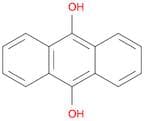
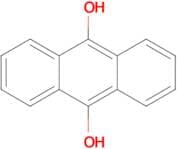
Anthrahydroquinone, with the CAS number 4981-66-2, is an organic compound that belongs to the class of hydroquinones and is derived from anthracene. It is characterized by its structure, which features two hydroxyl groups (-OH) attached to an anthracene backbone, specifically at the 9 and 10 positions. This compound is typically a solid at room temperature and is known for its deep color, often appearing as a dark red or purple substance. Anthrahydroquinone is soluble in organic solvents such as ethanol and acetone but has limited solubility in water. It exhibits reducing properties, making it useful in various chemical reactions, including redox processes. Additionally, it is employed in the production of dyes and pigments, as well as in the field of organic electronics. Due to its chemical properties, anthrahydroquinone can also participate in electron transfer reactions, which are significant in both synthetic and biological contexts. Safety precautions should be taken when handling this compound, as it may pose health risks upon exposure.
Formula:C14H10O2
InChI:InChI=1S/C14H10O2/c15-13-9-5-1-2-6-10(9)14(16)12-8-4-3-7-11(12)13/h1-8,15-16H
InChI key:InChIKey=PCFMUWBCZZUMRX-UHFFFAOYSA-N
SMILES:OC=1C2=C(C(O)=C3C1C=CC=C3)C=CC=C2
Synonyms:- 9,10-Anthracenediol
- 9,10-Anthradiol
- 9,10-Anthrahydroquinone
- 9,10-Dihydroxyanthracene
- 9,10-Dioxyanthracene
- Anthrahydroquinone
- Anthraquinol
- Hydroanthraquinone
- Anthracene-9,10-diol
Sort by
Purity (%)
0
100
|
0
|
50
|
90
|
95
|
100
Found 3 products.
Anthracene-9,10-diol
CAS:Anthracene-9,10-diol is a type of polycarboxylic acid that has been extensively studied for its potential to cause lung damage. It is a redox compound with a potential of +1.8 volts, which can be reduced by the addition of hydrogen. Anthracene-9,10-diol reacts with hydrochloric acid to produce methides and p-coumaryl alcohol in methanol solvent. This reaction was shown to be reversible by the addition of an aromatic hydrocarbon such as benzene or naphthalene. The kinetic data for this reaction have been determined using chromatographic methods. Anthracene-9,10-diol also has the ability to reduce diazonium salt and form nucleophilic addition products with hydroxyl groups on organic compounds such as acetaldehyde or 3-(3'-dimethylaminopropyl)-carbodiimide hydrochloride (EDC).Formula:C14H10O2Purity:Min. 95%Molecular weight:210.23 g/mol