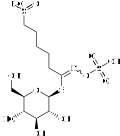
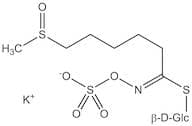
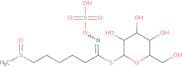
CAS 499-37-6
:Glucoalyssin
Description:
Glucoalyssin, with the CAS number 499-37-6, is a chemical compound that belongs to the class of alkaloids. It is derived from the plant species of the genus "Alyssum," which is known for its medicinal properties. This compound is characterized by its complex molecular structure, which includes multiple functional groups that contribute to its biological activity. Glucoalyssin has been studied for its potential pharmacological effects, including its role in glucose metabolism and possible anti-diabetic properties. Additionally, it may exhibit antioxidant activity, which can be beneficial in mitigating oxidative stress in biological systems. The compound is typically found in a crystalline form and is soluble in various organic solvents. Its stability and reactivity can vary depending on environmental conditions such as pH and temperature. As with many alkaloids, glucoalyssin may have specific interactions with biological receptors, making it a subject of interest in medicinal chemistry and pharmacology. Further research is necessary to fully elucidate its mechanisms of action and potential therapeutic applications.
Formula:C13H25NO10S3
InChI:InChI=1S/C13H25NO10S3/c1-26(19)6-4-2-3-5-9(14-24-27(20,21)22)25-13-12(18)11(17)10(16)8(7-15)23-13/h8,10-13,15-18H,2-7H2,1H3,(H,20,21,22)/t8-,10-,11+,12-,13+,26?/m1/s1
InChI key:InChIKey=HUCGRJSHMZWRQQ-LJBAHSCYSA-N
SMILES:S(C(CCCCCS(C)=O)=NOS(=O)(=O)O)[C@@H]1O[C@H](CO)[C@@H](O)[C@H](O)[C@H]1O
Synonyms:- 5-Methylsulfinylpentyl glucosinolate
- Glucopyranose, 1-thio-, 1-[6-(methylsulfinyl)hexanohydroximate] NO-(hydrogen sulfate), β-D-
- Glucoalyssinin
- β-D-Glucopyranose, 1-thio-, 1-[6-(methylsulfinyl)-N-(sulfooxy)hexanimidate]
- Glucoalyssin
Sort by
Purity (%)
0
100
|
0
|
50
|
90
|
95
|
100
Found 3 products.
Glucoalyssin potassium salt
CAS:Natural glycosideFormula:C13H24NO10S3KPurity:≥ 90.0 % (HPLC)Color and Shape:PowderMolecular weight:489.62Glucoalyssin kaliumsalz
CAS:Glucoalyssin is a dietary supplement that is derived from the Brassica genus of plants. This supplement contains a number of polyols, including glycerol, sorbitol, and erythritol. Glucoalyssin has been shown to inhibit cancer cell growth and induce apoptosis in vitro. It also inhibits the formation of gastric ulcers and reduces dry weight caused by gastritis in rats. Glucoalyssin may be used cosmetically as an anticarcinogenic agent due to its ability to suppress the production of glucosinolates and hydrogen chloride.Formula:C13H25NO10S3Purity:Min. 95%Color and Shape:PowderMolecular weight:451.5 g/mol