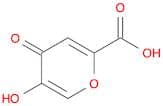
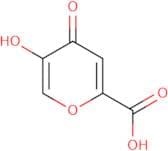
CAS 499-78-5
:Comenic acid
Description:
Comenic acid, with the CAS number 499-78-5, is a naturally occurring organic compound classified as a fatty acid. It is primarily derived from certain plant sources and is characterized by its long hydrocarbon chain, which contributes to its hydrophobic properties. The molecular structure of comenic acid features a carboxylic acid functional group, which imparts acidic characteristics and allows it to participate in various chemical reactions, such as esterification and saponification. This compound is known for its potential applications in the fields of biochemistry and pharmacology, particularly due to its role in biological systems and possible therapeutic effects. Additionally, comenic acid may exhibit antimicrobial and anti-inflammatory properties, making it of interest for further research in medicinal chemistry. Its solubility in organic solvents and limited solubility in water are typical of fatty acids, influencing its behavior in biological and industrial contexts. Overall, comenic acid represents a significant compound within the realm of organic chemistry, with various implications for health and industry.
Formula:C6H4O5
InChI:InChI=1S/C6H4O5/c7-3-1-5(6(9)10)11-2-4(3)8/h1-2,8H,(H,9,10)
InChI key:InChIKey=UUUICOMMFFTCHS-UHFFFAOYSA-N
SMILES:C(O)(=O)C1=CC(=O)C(O)=CO1
Synonyms:- 2-Carboxy-5-hydroxy-4-pyrone
- 4H-Pyran-2-carboxylic acid, 5-hydroxy-4-oxo-
- 5-Hydroxy-4-pyrone-2-carboxylic acid
- Comenic acid
- 5-Hydroxy-4-oxo-4H-pyran-2-carboxylic acid
- 5-Hydroxy-4-oxo-4H-pyran-2-carboxylic acid
Sort by
Purity (%)
0
100
|
0
|
50
|
90
|
95
|
100
Found 3 products.
5-Hydroxy-4-oxo-4H-pyran-2-carboxylic acid
CAS:Formula:C6H4O5Color and Shape:SolidMolecular weight:156.0930Comenic acid
CAS:Comenic acid is a metal chelate that is used as a model system to study the effects of disulfide bonds on signal pathways. It has been shown to reduce neuronal death in a tissue culture model. Comenic acid binds to glutamate, which leads to hydroxylation, and formaldehyde production. This reaction produces sodium salts and cyclic peptides that are toxic to cells. The mechanism of action of comenic acid is not well understood, but it may be due to metal chelation properties and the formation of reactive oxygen species, such as superoxide anion or hydrogen peroxide. Comenic acid also has a protective effect against seizures in mice with epilepsy and magnesium salt can decrease the concentration of this compound in the blood stream.
Formula:C6H4O5Purity:Min. 95%Color and Shape:PowderMolecular weight:156.09 g/mol