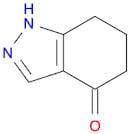
CAS 499206-33-6
:4H-Indazol-4-one, 1,5,6,7-tetrahydro-
Description:
4H-Indazol-4-one, 1,5,6,7-tetrahydro- is a heterocyclic organic compound characterized by its fused indazole structure, which includes a five-membered ring containing nitrogen atoms. This compound features a tetrahydro configuration, indicating the presence of four hydrogen atoms that contribute to its saturation. The indazole moiety is known for its biological activity, often serving as a scaffold in medicinal chemistry for the development of pharmaceuticals. The compound may exhibit various properties such as solubility in organic solvents, and its reactivity can be influenced by the presence of functional groups. Its molecular structure allows for potential interactions with biological targets, making it of interest in drug discovery and development. Additionally, the compound's CAS number, 499206-33-6, provides a unique identifier that facilitates its identification in chemical databases and literature. Overall, 4H-Indazol-4-one, 1,5,6,7-tetrahydro- represents a significant class of compounds with potential applications in various fields, including medicinal chemistry and materials science.
Formula:C7H8N2O
Sort by
Purity (%)
0
100
|
0
|
50
|
90
|
95
|
100
Found 4 products.
1,5,6,7-Tetrahydro-4H-indazol-4-one
CAS:Formula:C7H8N2OPurity:95%Color and Shape:SolidMolecular weight:136.15121,5,6,7-Tetrahydro-4H-indazol-4-one
CAS:1,5,6,7-Tetrahydro-4H-indazol-4-onePurity:97%Molecular weight:136.15g/mol6,7-Dihydro-1H-indazol-4(5H)-one
CAS:Formula:C7H8N2OPurity:97%Color and Shape:SolidMolecular weight:136.1546,7-dihydro-1h-indazol-4(5h)-one
CAS:6,7-dihydro-1h-indazol-4(5h)-one is a chemical compound that has various applications. It is commonly used in research as a cyanobacterial inhibitor, particularly against hydrogen fluoride and elastomeric nodularin. This compound has been found to induce lysis of cyanobacterial cells and can be used in the development of antibodies against microcystins. Additionally, 6,7-dihydro-1h-indazol-4(5h)-one has shown potential antimicrobial activity against Pseudomonas aeruginosa, inhibiting its growth by disrupting chloride transport. It is also utilized in surface treatment processes and as a research chemical for the synthesis of lactones and oligosaccharides. Its versatility makes it a valuable compound for various scientific applications.
Formula:C7H8N2OPurity:Min. 95%Molecular weight:136.15 g/mol