CAS 499231-24-2
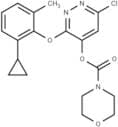
:4-Morpholinecarboxylic acid,6-chloro-3-(2-cyclopropyl-6-methylphenoxy)-4-pyridazinyl ester
Description:
4-Morpholinecarboxylic acid, 6-chloro-3-(2-cyclopropyl-6-methylphenoxy)-4-pyridazinyl ester, identified by CAS number 499231-24-2, is a synthetic organic compound characterized by its complex molecular structure. It features a morpholine ring, which contributes to its potential as a pharmacological agent, and a pyridazine moiety that may enhance its biological activity. The presence of a chloro substituent and a cyclopropyl group indicates that the compound may exhibit unique steric and electronic properties, potentially influencing its reactivity and interaction with biological targets. This compound is likely to be soluble in organic solvents, and its stability may vary depending on environmental conditions such as pH and temperature. Given its structural components, it may be of interest in medicinal chemistry, particularly in the development of new therapeutic agents. However, specific biological activity, toxicity, and pharmacokinetic properties would require further investigation through experimental studies.
Formula:C19H20ClN3O4
Sort by
Purity (%)
0
100
|
0
|
50
|
90
|
95
|
100
Found 4 products.
6-Chloro-3-(2-cyclopropyl-6-methylphenoxy)pyridazin-4-yl morpholine-4-carboxylate
CAS:6-Chloro-3-(2-cyclopropyl-6-methylphenoxy)pyridazin-4-yl morpholine-4-carboxylatePurity:98%Molecular weight:389.84g/molCyclopyrimorate
CAS:Cyclopyrimorate is a highly effective bleaching herbicide for weed control in rice fields.Formula:C19H20ClN3O4Color and Shape:SolidMolecular weight:389.833Cyclopyrimorate
CAS:Cyclopyrimorate is a small molecule that has been shown to inhibit the activity of protein kinase C (PKC). Cyclopyrimorate is a potent activator of PKC, and it has been shown to interact with both the ligand binding domain and the activation domain. This inhibitor binds to the ATP binding site on PKC, blocking access by ATP and inhibiting phosphorylation. Cyclopyrimorate has also been shown to have effects on ion channels, including voltage-gated potassium channels, calcium activated potassium channels, and nicotinic acetylcholine receptors. Cyclopyrimorate is a research tool for studying protein interactions in cells. It can be used as an antibody against PKC for immunocytochemistry or Western blotting experiments.
Formula:C19H20ClN3O4Purity:Min. 95%Molecular weight:389.8 g/mol