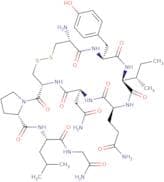
CAS 50-56-6
:oxytocin
- Oxytocin Lyophilized
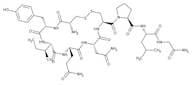
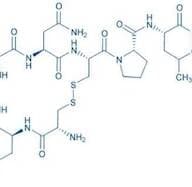
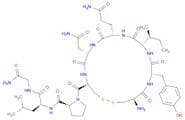
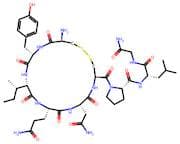
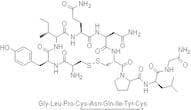
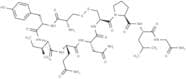
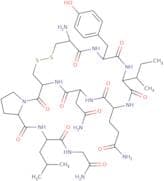
- H-Cys-Tyr-Ile-Gln-Asn-Cys-Pro-Leu-Gly-NH2 Disulfide bond
- Oxtocin
- (2S)-1-[(4R,7S,10S,13S,16S,19R)-19-Amino-13-[(2S)-Butan-2-Yl]-10-(2-Carbamoylethyl)-7-(Carbamoylmethyl)-16-[(4-Hydroxyphenyl)Methyl]-6,9,12,15,18-Pentaoxo-1,2-Dithia-5,8,11,14,17-Pentazacycloicosane-4-Carbonyl]-N-[(1S)-1-(Carbamoylmethylcarbamoyl)-3-Methyl-Butyl]Pyrrolidine-2-Carboxamide
- Oxytocin Solution
- 1-{[(4R,7S,10S,13S,16S,19R)-19-amino-7-(2-amino-2-oxoethyl)-10-(3-amino-3-oxopropyl)-13-[(2S)-butan-2-yl]-16-(4-hydroxybenzyl)-6,9,12,15,18-pentaoxo-1,2-dithia-5,8,11,14,17-pentaazacycloicosan-4-yl]carbonyl}-L-prolyl-L-leucylglycinamide
- 1-{[(4R,7S,10S,13S,16S,19R)-19-amino-7-(2-amino-2-oxoethyl)-10-(3-amino-3-oxopropyl)-13-[(2S)-butan-2-yl]-16-(4-hydroxybenzyl)-6,9,12,15,18-pentaoxo-1,2-dithia-5,8,11,14,17-pentaazacycloicosan-4-yl]carbonyl}-L-prolyl-L-leucylglycinamide acetate (1:1)
- [1-Hemicystine]-oxytocin
- 1: PN: WO0178758 SEQID: 1 claimed protein
- 1: PN: WO2004000993 PAGE: 53 claimed protein
- 3-Isoleucine-8-leucine vasopressin
- Alpha-hypophamine
- Atonin O
- Atonin O, 3-L-isoleucine-8-L-leucine-
- Di-sipidin
- Endopituitrina
- Glycinamide, L-cysteinyl-L-tyrosyl-L-isoleucyl-L-glutaminyl-L-asparaginyl-L-cysteinyl-L-prolyl-L-leucyl-, cyclic (1→6)-disulfide
- Hyphotocin
- Intertocine S
- L-Cysteinyl-L-tyrosyl-L-isoleucyl-L-glutaminyl-L-asparaginyl-L-cysteinyl-L-prolyl-L-leucylglycinamide cyclic (1→6)-disulfide
- Nobitocin S
- Orasthin
- oxitocina (Spanish) (EINECS)
- Oxystin
- Oxytocin (English, German) (DSL, EINECS, ENCS, AICS, ASIA-PAC, NZIoC)
- Oxytocine (French) (DSL, EINECS)
- Partocon
- Perlacton
- Pitocin
- Piton S
- Presoxin
- Synpitan forte
- Synpitan
- Synthetic oxytocin
- Syntocin
- Syntocinon
- Syntocinone
- Uteracon
- Vasopressin, 3-L-isoleucine-8-L-leucine-
- See more synonyms
Oxytocin, 96%
CAS:Oxytocin is used as a peptide hormone that acts predominantly as a neurotransmitter; stimulates uterine contraction and lactation, increases Na+ excretion; stimulates myometrial GTPase and phospholipase C. This Thermo Scientific Chemicals brand product was originally part of the Alfa Aesar productFormula:C43H66N12O12S2Purity:96%Color and Shape:SolidMolecular weight:1007.19Oxytocin
CAS:Oxytocin (OXT) is used to assist during labor to stimulate contractions of the uterus and mammary glands for milk letdown. Endogenous oxytocin also plays an important role in social behavior.Formula:C43H66N12O12S2Purity:98.7%Color and Shape:WhiteMolecular weight:1007.2Oxytocin
CAS:Polypeptide, protein and glycoprotein hormones, their derivatives and structural analogues, nesoiFormula:C43H66N12O12S2Color and Shape:White Off-White PowderMolecular weight:1007.23 g/molL-Cysteinyl-L-tyrosyl-L-isoleucyl-L-glutaminyl-L-asparaginyl-L-cysteinyl-L-prolyl-L-leucylglycinamide cyclic (1→6)-disulfide
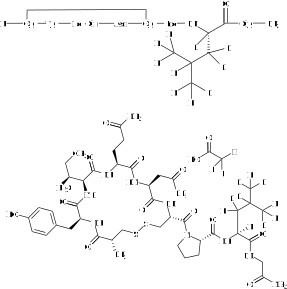
CAS:Formula:C43H66N12O12S2Purity:98%Color and Shape:SolidMolecular weight:1007.1873Oxytocin-d10 (Leu-d10) Trifluoroacetate
CAS:Formula:C43H56D10N12O12S2·C2HF3O2Molecular weight:1017.25 114.02Oxytocin Acetate
CAS:Formula:C43H66N12O12S2Purity:95%~99%Color and Shape:White to Off-white PowderMolecular weight:1007.19Oxytocin
CAS:Oxytocin (Syntocinon) is a mammalian neuropituitary hormone, a pleiotropic hypothalamic peptide, which contributes to labor and lactation. Cost-effective and quality-assured.Formula:C43H66N12O12S2Purity:98.05% - 99.87%Color and Shape:White Powder SolidMolecular weight:1007.19Oxytocin-d5 Trifluoroacetate
CAS:Controlled ProductApplications Labelled Oxytocin. The principal uterus-contracting and lactation-stimulating hormone of the posterior pituitary gland.
References Pierce, et al.: J. Biol. Chem., 199, 929 (1952), Tuppy, et al.: Biochem. Biophys. Acta, 11, 449 (1953), Cash, et al.: J. Med. Pharm. Chem., 5, 413 (1962), Nachtmann, F., et al.: Anal. Profiles Drug Subs., 10, 563 (1981),Formula:C45H62D5F3N12O14S2Color and Shape:White To Off-WhiteMolecular weight:1126.24Oxytocin (Human, Porcine, Bovine, Rat, Ovine)
CAS:Oxytocin is a peptide hormone that is produced by the hypothalamus and released by the pituitary gland. It is used to induce labor, control postpartum bleeding and stimulate milk production. Oxytocin also plays a role in sexual arousal, social recognition, and trust. It has been shown to have an inhibitory effect on many types of ion channels, including those found in the heart, central nervous system, and blood vessels. Oxytocin binds to receptors that are found throughout the body and brain. The receptor for oxytocin is known as OXT. This receptor belongs to the G-protein coupled receptor family of receptors. Oxytocin was first isolated from sheep serum in 1906 by Henry Dale and Charles Robert Harington. It was later synthesized in 1953 by Vincent du Vigneaud. This product has disulfide bonds between Cys1-Cys6.
Formula:C43H66N12O12S2Purity:Min. 95%Molecular weight:1,007.2 g/molOxytocin
CAS:Natriuretic hormone; induces uterine contraction and lactation
Formula:C43H66N12O12S2Purity:Min. 98 Area-%Color and Shape:White Off-White PowderMolecular weight:1,007.19 g/molRef: 3D-FO35402
Discontinued product