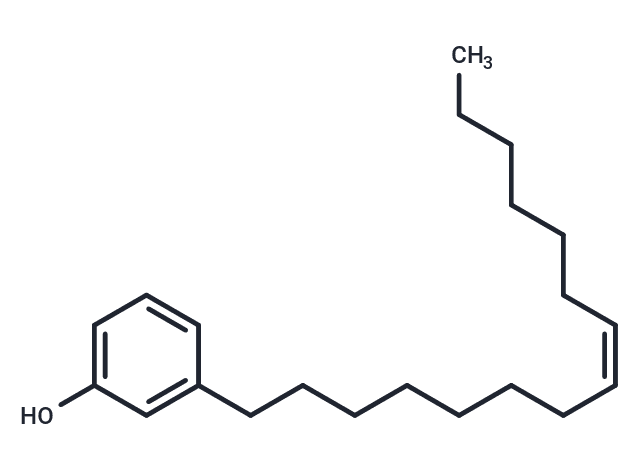
CAS 501-26-8
:Ginkgol
Description:
Ginkgol, also known as ginkgolide, is a chemical compound derived from the leaves of the Ginkgo biloba tree. It is classified as a terpenoid and is notable for its unique structure, which includes a bicyclic lactone. Ginkgolides are primarily recognized for their potential pharmacological properties, particularly in enhancing cognitive function and promoting vascular health. They exhibit anti-inflammatory and antioxidant activities, which contribute to their therapeutic potential in conditions such as dementia and peripheral vascular diseases. Ginkgol has a relatively low solubility in water but is soluble in organic solvents, making it suitable for various extraction methods. The compound is often studied for its role in traditional medicine and as a dietary supplement, although its efficacy and safety profile continue to be evaluated in clinical research. As with any bioactive compound, it is essential to consider dosage and potential interactions with other medications when using ginkgol or ginkgo extracts.
Formula:C21H34O
InChI:InChI=1S/C21H34O/c1-2-3-4-5-6-7-8-9-10-11-12-13-14-16-20-17-15-18-21(22)19-20/h7-8,15,17-19,22H,2-6,9-14,16H2,1H3/b8-7-
InChI key:InChIKey=YLKVIMNNMLKUGJ-FPLPWBNLSA-N
SMILES:C(CCCCCC/C=C\CCCCCC)C1=CC(O)=CC=C1
Synonyms:- Phenol, 3-(8Z)-8-pentadecenyl-
- Phenol, m-8-pentadecenyl-, (Z)-
- Phenol, 3-(8Z)-8-pentadecen-1-yl-
- Phenol, 3-(8-pentadecenyl)-, (Z)-
- 3-(8Z)-8-Pentadecen-1-ylphenol
Sort by
Purity (%)
0
100
|
0
|
50
|
90
|
95
|
100
Found 3 products.
Cardanol (C15:1)
CAS:Cardanol (C15:1), found in cashew nut shell liquid, induces mitochondria-associated apoptosis in human melanoma cells.Formula:C21H34OPurity:98.48% - 99.77%Color and Shape:SolidMolecular weight:302.49Ref: TM-TN3594
100mgTo inquire1mg92.00€2mg135.00€5mg259.00€1mL*10mM (DMSO)268.00€10mg371.00€25mg583.00€50mg800.00€Cardanol monoene
CAS:Cardanol monoene is a phenolic lipid, which is a natural derivative obtained from cashew nut shell liquid. It is sourced from the renewable agricultural by-product of the Anacardium occidentale, allowing for a sustainable means of production. Its chemical structure features a phenolic ring with an aliphatic chain, which imparts unique properties that facilitate its mode of action.
Formula:C21H34OPurity:Min. 95%Color and Shape:PowderMolecular weight:302.49 g/molRef: 3D-AAA50126
Discontinued product