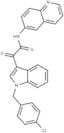
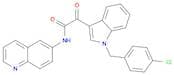
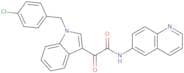
![1H-Indole-3-acetamide, 1-[(4-chlorophenyl)methyl]-a-oxo-N-6-quinolinyl-](/_next/image/?url=https%3A%2Fstatic.cymitquimica.com%2Fcas-image%2Fthumb-webp%2F491135-1h-indole-3-acetamide-1-4-chlorophenyl-methyl-a-oxo-n-6-quinolinyl.webp&w=3840&q=75)
CAS 501921-61-5
:1H-Indole-3-acetamide, 1-[(4-chlorophenyl)methyl]-a-oxo-N-6-quinolinyl-
Description:
1H-Indole-3-acetamide, 1-[(4-chlorophenyl)methyl]-α-oxo-N-6-quinolinyl- (CAS 501921-61-5) is a synthetic organic compound characterized by its complex structure, which includes an indole ring, an acetamide group, and a quinoline moiety. This compound typically exhibits properties associated with both indole and quinoline derivatives, such as potential biological activity, including antimicrobial and anticancer properties. The presence of the 4-chlorobenzyl group may enhance its lipophilicity, influencing its pharmacokinetic profile. The α-oxo group suggests potential reactivity, making it a candidate for further chemical modifications. In terms of solubility, compounds of this nature often show variable solubility in polar and non-polar solvents, which can affect their application in biological systems. Additionally, the compound's structure may allow for interactions with various biological targets, making it of interest in medicinal chemistry and drug development. As with many synthetic compounds, safety and handling precautions are essential due to potential toxicity or reactivity.
Formula:C26H18ClN3O2
Synonyms:- Entasobulin
Sort by
Purity (%)
0
100
|
0
|
50
|
90
|
95
|
100
Found 3 products.
Entasobulin
CAS:Entasobulin is an inhibitor of β-tubulin polymerization. It has a potential anticancer activity.Formula:C26H18ClN3O2Purity:98.40%Color and Shape:SolidMolecular weight:439.89Entasobulin
CAS:Controlled ProductEntasobulin is a molecule that has been designed to enhance nucleic acid uptake, transfer and detection. It is a small molecule that is taken up by cells in the body fluid. Entasobulin can be used as a diagnostic agent for the detection of DNA and RNA molecules and for the identification of active agents in pharmaceutical formulations. This molecule can also be used in molecular techniques such as PCR, RT-PCR, and ELISA.
Formula:C26H18ClN3O2Purity:Min. 95%Molecular weight:439.89 g/mol