CAS 502145-18-8
:4-Bromo-1,3-thiazol-2-amine
Description:
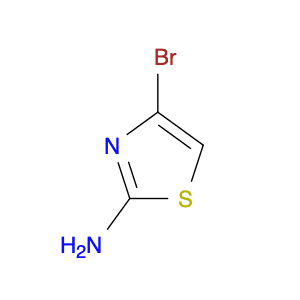
4-Bromo-1,3-thiazol-2-amine is a heterocyclic organic compound characterized by the presence of a thiazole ring, which is a five-membered ring containing both sulfur and nitrogen atoms. The compound features a bromine substituent at the 4-position and an amino group at the 2-position of the thiazole ring. This structure imparts unique chemical properties, including potential reactivity due to the presence of the amino group, which can participate in various chemical reactions such as nucleophilic substitutions. The bromine atom enhances the compound's electrophilic character, making it useful in synthetic organic chemistry. 4-Bromo-1,3-thiazol-2-amine may exhibit biological activity, making it of interest in pharmaceutical research, particularly in the development of new drugs or agrochemicals. Its solubility and stability can vary depending on the solvent and conditions, and it is important to handle this compound with care due to potential toxicity associated with brominated compounds. Overall, its unique structural features make it a valuable compound in both research and industrial applications.
Formula:C3H3BrN2S
InChI:InChI=1/C3H3BrN2S/c4-2-1-7-3(5)6-2/h1H,(H2,5,6)
SMILES:c1c(Br)[nH]c(=N)s1
Synonyms:- 2-Thiazolamine, 4-Bromo-
- 4-Bromothiazol-2-amine
- 4-Bromothiazol-2-ylamine
- 4-Bromo-Thiazol-2-Ylamine
Sort by
Purity (%)
0
100
|
0
|
50
|
90
|
95
|
100
Found 4 products.
2-Amino-4-bromothiazole
CAS:Formula:C3H3BrN2SPurity:97%Color and Shape:SolidMolecular weight:179.03834-Bromo-1,3-thiazol-2-amine
CAS:4-Bromo-1,3-thiazol-2-amineFormula:C3H3BrN2SPurity:95%Color and Shape: light yellow to brown solidMolecular weight:179.04g/mol4-Bromo-2-thiazolamine
CAS:4-Bromo-2-thiazolamine is an anticarcinogenic agent that belongs to the class of methoxy, acetylation, synthetic methods. It has been shown to induce DNA fragmentation and inhibit cell proliferation in vitro. 4-Bromo-2-thiazolamine inhibits cancer in mice with melanoma and human liver cancer cells by inducing apoptosis. The anticancer activity of this compound may be due to its ability to inhibit the growth of cancer cells by interfering with protein synthesis.Formula:C3H3BrN2SPurity:Min. 95%Molecular weight:179.04 g/mol