CAS 50358-35-5
:6-methylquinolin-5-amine
Description:
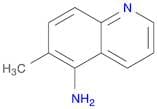
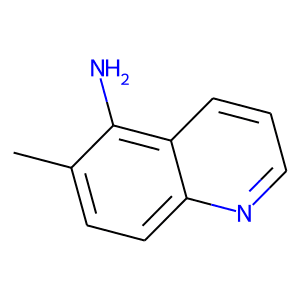
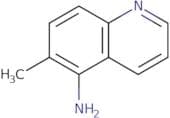
6-Methylquinolin-5-amine is an organic compound characterized by its quinoline structure, which consists of a fused benzene and pyridine ring. The presence of a methyl group at the 6-position and an amino group at the 5-position contributes to its unique chemical properties. This compound typically appears as a solid and is soluble in organic solvents, reflecting its aromatic nature. It may exhibit basic properties due to the amino group, allowing it to participate in various chemical reactions, such as nucleophilic substitutions or coupling reactions. Additionally, 6-methylquinolin-5-amine can serve as a building block in the synthesis of more complex molecules, including pharmaceuticals and agrochemicals. Its potential biological activities may include antimicrobial or anticancer properties, making it of interest in medicinal chemistry. Safety data should be consulted for handling and storage, as with any chemical substance, to ensure proper precautions are taken.
Formula:C10H10N2
InChI:InChI=1/C10H10N2/c1-7-4-5-9-8(10(7)11)3-2-6-12-9/h2-6H,11H2,1H3
SMILES:Cc1ccc2c(cccn2)c1N
Synonyms:- 5-Quinolinamine, 6-methyl-
- 6-Methylquinolin-5-amine
- 5-Amino-6-methylquinoline
- AKOS BBS-00005361
- 6-METHYL-5-QUINOLINAMINE
- 5-Amino-6-methylquinoline 97%
- 6-METHYL-QUINOLIN-5-YLAMINE
- ASINEX-REAG BAS 09889230
- 6-Methyl-5-aminoquinoline, 6-Methylquinolin-5-ylamine
- 6-methyl-5-quinolinylamine
- AKOS AUF01722
Sort by
Purity (%)
0
100
|
0
|
50
|
90
|
95
|
100
Found 4 products.
5-Quinolinamine, 6-methyl-
CAS:Formula:C10H10N2Purity:95%Color and Shape:SolidMolecular weight:158.19986-Methyl-5-quinolinamine
CAS:6-Methyl-5-quinolinamine (6MQ) is a cationic quinolone antibacterial that inhibits bacterial growth by binding to DNA. It has been shown to inhibit the growth of bacteria, such as Escherichia coli and Staphylococcus aureus. 6MQ binds to the DNA gyrase enzyme and prevents it from unwinding the double helix, which prevents transcription and replication. The quinoline ring in this compound also contains an amine group, which is important for its antibacterial activity. 6MQ forms hydrogen bonds with the carboxylic acid groups on the surface of bacterial cells, leading to cell death. 6MQ can be synthesized by reacting malonate with fluorine gas in order to form an intermediate molecule, which reacts with ammonia and methyl iodide in order to form a quinoline ring.Formula:C10H10N2Purity:Min. 95%Molecular weight:158.2 g/mol