CAS 50358-40-2
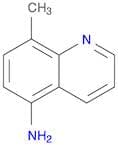
:5-Amino-8-methylquinoline
Description:
5-Amino-8-methylquinoline is an organic compound characterized by its quinoline structure, which consists of a fused benzene and pyridine ring. This compound features an amino group (-NH2) at the 5-position and a methyl group (-CH3) at the 8-position of the quinoline ring, contributing to its unique chemical properties. It is typically a yellow to brown solid and is soluble in organic solvents, with limited solubility in water. The presence of the amino group allows for potential reactivity in various chemical reactions, including nucleophilic substitutions and coupling reactions, making it useful in organic synthesis and as an intermediate in the production of dyes and pharmaceuticals. Additionally, 5-amino-8-methylquinoline may exhibit biological activity, which can be explored for potential applications in medicinal chemistry. Safety data should be consulted for handling and usage, as with any chemical substance, to ensure proper precautions are taken.
Formula:C10H10N2
InChI:InChI=1S/C10H10N2/c1-7-4-5-9(11)8-3-2-6-12-10(7)8/h2-6H,11H2,1H3
InChI key:InChIKey=PILPIITVELSUBH-UHFFFAOYSA-N
SMILES:NC=1C2=C(C(C)=CC1)N=CC=C2
Synonyms:- 5-Amino-8-methylquinoline
- 5-Quinolinamine, 8-methyl-
- 8-Methyl-5-quinolinamine
- NSC 201508
- Quinoline, 5-amino-8-methyl-
Sort by
Purity (%)
0
100
|
0
|
50
|
90
|
95
|
100
Found 4 products.
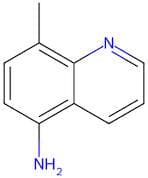
8-Methylquinolin-5-amine
CAS:Formula:C10H10N2Purity:95%Color and Shape:SolidMolecular weight:158.19988-Methyl-quinolin-5-ylamine
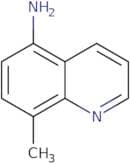
CAS:Formula:C10H10N2Purity:95%Color and Shape:SolidMolecular weight:158.2048-Methyl-quinolin-5-ylamine
CAS:8-Methylquinolin-5-ylamine is a heterocyclic compound. It is prepared by the catalytic oxidation of paraformaldehyde, which can be produced from formaldehyde and chloral hydrate or from formaldehyde and ammonium sulfate. 8-Methylquinolin-5-ylamine has been shown to have carcinogenic activity in animal studies, although it does not seem to have carcinogenic properties in humans. The carcinogenic effect may be due to its ability to induce cancer through a number of mechanisms, including binding with DNA, inhibiting DNA repair enzymes, or causing mutations in the DNA molecule. This chemical also has the potential to cause damage by forming covalent bonds with cellular macromolecules such as proteins or nucleic acids (e.g., DNA).Formula:C10H10N2Purity:Min. 95%Molecular weight:158.2 g/mol