CAS 504-74-5
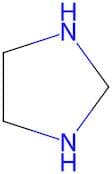
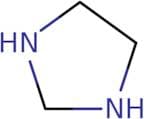
:Imidazolidine
Description:
Imidazolidine, with the CAS number 504-74-5, is a five-membered heterocyclic compound featuring two nitrogen atoms in its ring structure. This compound is characterized by its colorless to pale yellow liquid form and has a distinctive amine-like odor. Imidazolidine is known for its basicity due to the presence of nitrogen atoms, which can act as proton acceptors. It is soluble in water and various organic solvents, making it versatile in chemical applications. The compound is often utilized as a building block in organic synthesis, particularly in the preparation of pharmaceuticals and agrochemicals. Additionally, imidazolidine can participate in various chemical reactions, including ring-opening and condensation reactions, due to its nucleophilic nature. Its derivatives may exhibit interesting biological activities, contributing to its relevance in medicinal chemistry. However, handling imidazolidine requires caution, as it can be irritating to the skin and eyes, and appropriate safety measures should be observed during its use.
Formula:C3H8N2
InChI:InChI=1S/C3H8N2/c1-2-5-3-4-1/h4-5H,1-3H2
InChI key:InChIKey=WRYCSMQKUKOKBP-UHFFFAOYSA-N
SMILES:C1CNCN1
Synonyms:- 1,3-Diazacyclopentane
- Imidazole, tetrahydro-
- Imidazolidine
Sort by
Purity (%)
0
100
|
0
|
50
|
90
|
95
|
100
Found 4 products.
Imidazolidine
CAS:Imidazolidine is an antibiotic-resistant strain that belongs to the class of amides. It has been shown to have a pharmacokinetic properties, including salt metathesis, and biochemical properties. Imidazolidine is also active against bacteria that are resistant to other antibiotics. The chemical structure of imidazolidine contains nitrogen atoms and is therefore susceptible to attack by nitrosating agents. Sodium citrate, which is used as a buffer for this drug in injectable formulations, may react with the drug at high pH levels and form the nitrosated derivative of imidazolidine. Imidazolidine can be synthesized from sodium carbonate and ammonia in the presence of catalysts such as iron compounds or aluminum chloride. The rate constant for this reaction has been shown to be 6×10 M-1s-1 at 25° C, which indicates that this reaction occurs rapidly at physiological conditions.Formula:C3H8N2Purity:90%Molecular weight:72.11 g/mol