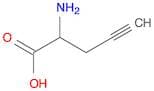
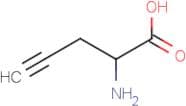
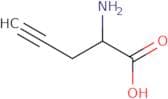
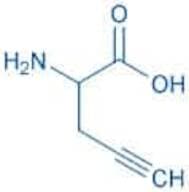
CAS 50428-03-0
:DL-Propargylglycine
Description:
DL-Propargylglycine, with the CAS number 50428-03-0, is an amino acid derivative characterized by its unique propargyl functional group. This compound is a racemic mixture of two enantiomers, which means it contains both the D- and L- forms of propargylglycine. It is primarily recognized for its role as a selective inhibitor of the enzyme cystathionine gamma-lyase, which is involved in the transsulfuration pathway. This inhibition can influence various biological processes, including the regulation of hydrogen sulfide production in the body. DL-Propargylglycine is typically a white to off-white solid and is soluble in water and organic solvents, making it versatile for various applications in biochemical research. Its potential therapeutic implications are being explored, particularly in the context of neurodegenerative diseases and metabolic disorders. As with many chemical substances, proper handling and safety precautions are essential due to its biological activity.
Formula:C5H7NO2
InChI:InChI=1S/C5H7NO2/c1-2-3-4(6)5(7)8/h1,4H,3,6H2,(H,7,8)
InChI key:InChIKey=DGYHPLMPMRKMPD-UHFFFAOYSA-N
SMILES:C(CC#C)(C(O)=O)N
Synonyms:- DL-Propargylglycine
- 4-Pentynoic acid, 2-amino-
- 4-Pentynoic acid, 2-amino-, (±)-
- DL-2-Propynylglycine
- 2-Amino-4-pentynoic acid
Sort by
Purity (%)
0
100
|
0
|
50
|
90
|
95
|
100
Found 5 products.
DL-Propargylglycine
CAS:DL-Propargylglycine is a molecule that has been used as a model system for studying the interaction of neurokinin-1 receptor with response elements. It has also been shown to have inhibitory properties on polymerase chain, which is important in the process of energy metabolism. This compound has been shown to increase cytosolic Ca2+ and inhibit nuclear DNA synthesis in certain cells. DL-Propargylglycine can be used to study the effects of growth factor-β1 on myocardial infarcts and bowel disease.Formula:C5H7NO2Purity:Min. 95%Color and Shape:White Off-White PowderMolecular weight:113.11 g/molH-DL-Pra-OH
CAS:Inhibitor of cystathione γ-synthase (Ki 18 mM, k(inact) 0.56 min⁻¹) and cystathionine γ-lyase. Irreversibly inactivates proline dehydrogenase.Formula:C5H7NO2Purity:> 99%Color and Shape:WhiteMolecular weight:113.12