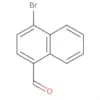
CAS 50672-84-9
:1-Naphthalenecarboxaldehyde, 4-bromo-
Description:
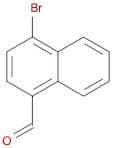
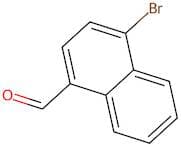
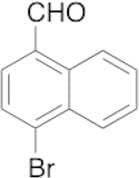
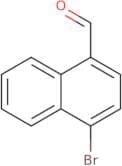
1-Naphthalenecarboxaldehyde, 4-bromo- is an organic compound characterized by its naphthalene backbone with a carboxaldehyde functional group and a bromine substituent at the 4-position. This compound typically appears as a pale yellow to brownish liquid or solid, depending on its purity and temperature. It is known for its aromatic properties, which contribute to its distinct odor. The presence of the bromine atom enhances its reactivity, making it useful in various chemical synthesis applications, particularly in the production of pharmaceuticals and agrochemicals. The compound is moderately soluble in organic solvents and exhibits limited solubility in water. It is important to handle this substance with care, as it may pose health risks upon exposure, including irritation to the skin and respiratory system. Additionally, it is crucial to consider its environmental impact, as halogenated compounds can be persistent in the environment. Overall, 1-Naphthalenecarboxaldehyde, 4-bromo- serves as a valuable intermediate in organic synthesis and research.
Formula:C11H7BrO
Sort by
Purity (%)
0
100
|
0
|
50
|
90
|
95
|
100
Found 5 products.
4-Bromo-1-naphthaldehyde
CAS:Formula:C11H7BrOPurity:95%Color and Shape:SolidMolecular weight:235.07674-Bromo-1-napthaldehyde
CAS:Controlled ProductFormula:C11H7BrOColor and Shape:NeatMolecular weight:235.084-Bromo-1-napthaldehyde
CAS:4-Bromo-1-napthaldehyde is a chemical compound that belongs to the group of formyl compounds. It has a formyl group, which can be easily alkylated. 4-Bromo-1-napthaldehyde has been used in the industrial preparation of pharmaceuticals and agrochemicals as well as in the synthesis of other compounds. This molecule can be synthesized by reacting formic acid with bromine and sodium hydroxide. In some cases, this reaction may require heating at higher temperatures or using more than one equivalent of sodium hydroxide. The efficiency and reaction time depend on the technique used to perform the synthesis, such as Grignard reagent or hybridization.Formula:C11H7BrOPurity:Min. 95%Molecular weight:235.08 g/mol