CAS 50795-27-2
:N-Acetylneuraminic Acid
Description:
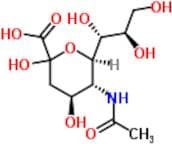
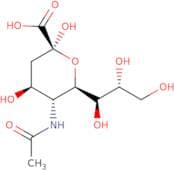
N-Acetylneuraminic acid (Neu5Ac) is a naturally occurring sialic acid, a type of sugar acid that plays a crucial role in various biological processes. It is characterized by its nine-carbon backbone and contains an acetamido group, which contributes to its solubility and reactivity. This compound is typically found on the surface of glycoproteins and glycolipids, where it is involved in cell recognition, signaling, and immune responses. N-Acetylneuraminic acid is known for its role in the modulation of cellular interactions and is significant in the context of viral infections, as many viruses exploit sialic acid residues for entry into host cells. The compound is also important in the development of certain diseases, including neurodegenerative disorders. In terms of physical properties, N-acetylneuraminic acid is a white to off-white crystalline powder, soluble in water, and has a sweet taste. Its chemical structure allows for various modifications, making it a subject of interest in biochemical research and pharmaceutical applications.
Formula:C11H19NO9
Synonyms:- [Synonyms]
Sort by
Purity (%)
0
100
|
0
|
50
|
90
|
95
|
100
Found 2 products.
N-Acetylneuraminic Acid
CAS:Heterocyclic compounds with oxygen hetero-atom(s) only, nesoiFormula:C11H19NO9·2H2OColor and Shape:White Crystalline PowderMolecular weight:309.10598N-Acetylneuraminic acid dihydrate
CAS:N-Acetylneuraminic acid dihydrate, also known as sialic acid dehydrate or Neu5Ac dehydrate, is often present in the terminal chains of many oligosaccharides and has a cellular recognition function (Varki and Schauer, 2009). Together with its non-hydrated form, N-acetylneuraminic acid and derivatives function as neurotransmitters and are involved in many post-translational protein modifications. N-acetylneuraminic acids are present on the surface of the vertebrate cells and can interact with pathogens, such as, bacteria and viruses. Recent scientific studies have revealed that the spike glycoprotein of the SARS-COV 2 coronavirus, responsible of the COVID-19, shows a high affinity to N-acetylneuranimic acid (Baker, 2020).Formula:C11H19NO9·2H2OPurity:Min. 95%Color and Shape:PowderMolecular weight:345.3 g/mol