CAS 51168-26-4
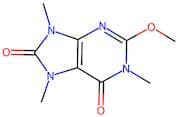
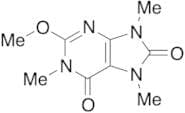
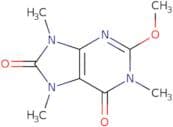
:2-methoxy-1,7,9-trimethylpurine-6,8-dione
Description:
2-Methoxy-1,7,9-trimethylpurine-6,8-dione, also known as a derivative of purine, is a chemical compound characterized by its complex structure that includes a purine base modified with methoxy and methyl groups. This compound features a methoxy group (-OCH3) at the 2-position and three methyl groups at the 1, 7, and 9 positions of the purine ring, along with carbonyl groups at the 6 and 8 positions, contributing to its dione classification. The presence of these functional groups influences its solubility, stability, and reactivity. Typically, purine derivatives are known for their biological significance, often playing roles in nucleic acid structure and function, as well as in various biochemical pathways. The compound may exhibit properties such as being a potential substrate or inhibitor in enzymatic reactions, and it may also have implications in pharmacology or biochemistry due to its structural similarities to naturally occurring nucleobases. Its CAS number, 51168-26-4, allows for precise identification in chemical databases and literature.
Formula:C9H12N4O3
Synonyms:- 1H-Purine-6,8-dione, 7,9-dihydro-2-methoxy-1,7,9-trimethyl-
- Caffeine Impurity 7 (Methylliberine)
- Caffeine Impurity 7
- 2-methoxy-1,7,9-trimethylpurine-6,8-dione
Sort by
Purity (%)
0
100
|
0
|
50
|
90
|
95
|
100
Found 7 products.
Methylliberine
CAS:Methylliberine is an anticancer compound that functions as a kinase inhibitor. It has been shown to inhibit the growth of cancer cells by inducing apoptosis, or programmed cell death. Methylliberine is a Chinese herbal medicine and is found in human urine after consumption of oseltamivir, an antiviral drug. Methylliberine acts as an analog to protein kinases, which are enzymes that regulate cellular signaling pathways. By inhibiting these kinases, methylliberine prevents the activation of tumor-promoting proteins and reduces the growth of cancer cells. This natural compound has great potential as a therapeutic agent for cancer treatment due to its ability to selectively target cancer cells while sparing healthy cells.
Formula:C9H12N4O3Purity:Min. 95%Molecular weight:224.22 g/molRef: 3D-BCA16826
Discontinued product