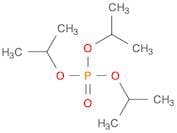
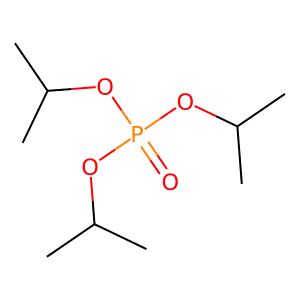
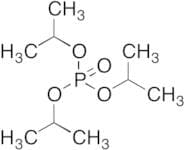
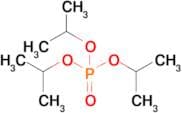
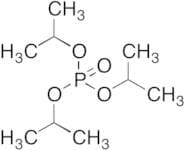
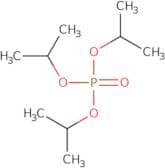
CAS 513-02-0
:Triisopropyl phosphate
- Isopropyl phosphate ((C<sub>3</sub>H<sub>7</sub>O)<sub>3</sub>PO)
- NSC 62275
- Nsc 46370
- Phosphoric acid, triisopropyl ester
- Phosphoric acid, tris(1-methylethyl) ester
- Phosphoric acid, tris(1-methylethyl) ester (9CI)
- Triisopropoxyphosphine oxide
- Tripropan-2-Yl Phosphate
- Isopropyl phosphate ((C3H7O)3PO)
- Triisopropyl phosphate
Triisopropyl phosphate
CAS:Controlled ProductFormula:C9H21O4PColor and Shape:NeatMolecular weight:224.23Triisopropyl Phosphate
CAS:Controlled ProductApplications Triisopropyl Phosphate can be used as a flame retardant and catalyst.
Not a dangerous good if item is equal to or less than 1g/ml and there is less than 100g/ml in the package
References Zhang, Tie-jiang.: Meitan Jishu,29(2), 204-206 (2010);Chen, Yong-Fu, et al.: Jingxi Huagong, 17(9), 541-543 (2000)Formula:C9H21O4PColor and Shape:NeatMolecular weight:224.23Triisopropyl phosphate
CAS:Triisopropyl phosphate inhibits TFF1 and EGR3 gene expression and exhibits anti-estrogenic activity by suppressing Estradiol-induced proliferation of MCF-7 cells, with an EC50 of 341 μM. Additionally, Triisopropyl phosphate reduces estrogen response element (ERE)-stimulated luciferase activity in MVLN cells, with an EC50 of 900 μM.Formula:C9H21O4PColor and Shape:SolidMolecular weight:224.234Triisoproyl phosphate
CAS:Triisoproyl phosphate is a phosphatase inhibitor that is used in the preparation of polyvinylpolypyrrolidone (PVPP) or polyvinylpyrrolidone-coated nuclear magnetic resonance (NMR) sample tubes. Triisopropyl phosphate inhibits phosphatases, which are enzymes that catalyze the hydrolysis of ester bonds. This prevents the release of non-bound phosphate groups and results in a more stable polymer film. Triisopropyl phosphate has been shown to inhibit 5-HT2 receptors and trimethyl tryptamine in vitro, with an IC50 value of 3 μM. It also inhibits matrix metalloproteinases, which are enzymes that degrade the extracellular matrix and promote inflammation. The inhibition of these enzymes may be due to its ability to bind to and stabilize the active site by nucleophilic attack on the hydroxyl group. Triisopropyl phosphate has been shown
Purity:Min. 95%Ref: 3D-FT165778
Discontinued product