CAS 51362-38-0
:6-phenoxynicotinic acid
Description:
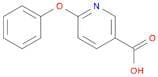
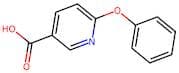
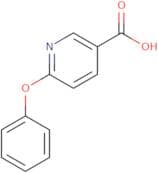
6-Phenoxynicotinic acid is an organic compound that belongs to the class of heterocyclic aromatic compounds, specifically a derivative of nicotinic acid. It features a pyridine ring, which is a six-membered aromatic ring containing one nitrogen atom, and a phenoxy group, which is a phenyl group (a benzene ring) bonded through an oxygen atom. This compound is characterized by its potential biological activity, including roles in medicinal chemistry and as a building block for various pharmaceuticals. It typically exhibits moderate solubility in polar solvents due to the presence of the carboxylic acid functional group, which can participate in hydrogen bonding. The compound may also display various functional properties, such as acting as a ligand in coordination chemistry or as an intermediate in organic synthesis. Its structural features suggest potential applications in drug development, particularly in targeting specific biological pathways. As with many organic compounds, its stability and reactivity can be influenced by environmental conditions such as pH and temperature.
Formula:C12H9NO3
InChI:InChI=1/C12H9NO3/c14-12(15)9-6-7-11(13-8-9)16-10-4-2-1-3-5-10/h1-8H,(H,14,15)
SMILES:c1ccc(cc1)Oc1ccc(cn1)C(=O)O
Synonyms:- 6-Phenoxypyridine-3-Carboxylic Acid
Sort by
Purity (%)
0
100
|
0
|
50
|
90
|
95
|
100
Found 4 products.
6-Phenoxynicotinic acid
CAS:6-Phenoxynicotinic acidPurity:98%Color and Shape:White PowderMolecular weight:215.20g/mol6-Phenoxypyridine-3-carboxylic acid
CAS:Formula:C12H9NO3Purity:95%Color and Shape:SolidMolecular weight:215.2086-Phenoxynicotinic acid
CAS:6-Phenoxynicotinic acid is an anticancer agent that is potent against a number of human cancer cell lines. It has shown anti-cancer efficacy in animal models and is known to interact with the cancer cells by modifying their DNA. 6-Phenoxynicotinic acid inhibits the growth of cancer cells by inhibiting the synthesis of specific proteins required for cell division. This compound has been synthesized and shown to have potent anticancer activity, which may be due to its ability to inhibit tyrosine kinases, leading to inhibition of protein synthesis.Formula:C12H9NO3Purity:Min. 95%Molecular weight:215.2 g/mol