CAS 51449-77-5
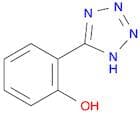
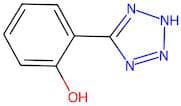
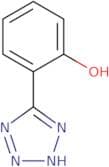
:2-(1H-Tetrazol-5-yl)phenol
Description:
2-(1H-Tetrazol-5-yl)phenol, with the CAS number 51449-77-5, is an organic compound characterized by the presence of both a phenolic group and a tetrazole ring. This compound typically exhibits properties such as high solubility in polar solvents due to the presence of the hydroxyl (-OH) group, which can engage in hydrogen bonding. The tetrazole moiety contributes to its potential as a bioactive molecule, often enhancing its pharmacological properties. The compound may display acidic behavior due to the phenolic hydroxyl group, and its tetrazole ring can participate in various chemical reactions, including nucleophilic substitutions and coordination with metal ions. Additionally, 2-(1H-Tetrazol-5-yl)phenol may exhibit interesting electronic properties, making it a candidate for applications in materials science and medicinal chemistry. Its stability and reactivity can be influenced by the substituents on the phenolic ring and the overall molecular structure, which can be tailored for specific applications in research and industry.
Formula:C7H6N4O
InChI:InChI=1/C7H6N4O/c12-6-4-2-1-3-5(6)7-8-10-11-9-7/h1-4,12H,(H,8,9,10,11)
SMILES:c1ccc(c(c1)c1n[nH]nn1)O
Synonyms:- 1-Phenyl-5-hydroxytetrazole
- 1-phenyl-1,2-dihydro-5H-tetrazol-5-one
- 2-(2H-tetrazol-5-yl)phenol
Sort by
Purity (%)
0
100
|
0
|
50
|
90
|
95
|
100
Found 5 products.
Phenol, 2-(1H-tetrazol-5-yl)-
CAS:Formula:C7H6N4OPurity:98%Color and Shape:SolidMolecular weight:162.14872-(1H-Tetrazol-5-yl)phenol
CAS:2-(1H-Tetrazol-5-yl)phenol (HTZP) is a fluorescent probe that has been shown to have a high affinity for cancer cells. It binds to the DNA of cancer cells and emits light in the presence of hydrogen peroxide. This process generates a signal with a unique wavelength that can be detected by optical microscopy, flow cytometry, and fluorescence spectroscopy. HTZP has also been shown to bind to alkali metal ions such as Li+, K+, Na+, and Cs+. HTZP is an example of a supramolecular ligand that binds to cisplatin, which inhibits DNA replication and protein synthesis in cancer cells. The binding constants for HTZP are higher than those for cisplatin, suggesting that it may be used as an alternative treatment for cancer.
Formula:C7H6N4OPurity:Min. 95%Molecular weight:162.15 g/molRef: 3D-BCA44977
Discontinued product