CAS 51498-33-0
:ethyl 4-aminocyclohexanecarboxylate
Description:
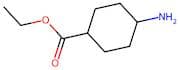
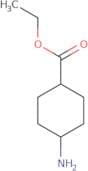
Ethyl 4-aminocyclohexanecarboxylate, with the CAS number 51498-33-0, is an organic compound characterized by its cyclohexane ring structure substituted with an amino group and an ethyl ester functional group. This compound typically appears as a colorless to pale yellow liquid or solid, depending on its purity and specific conditions. It is soluble in organic solvents and exhibits moderate polarity due to the presence of both the amino and carboxylate functional groups. Ethyl 4-aminocyclohexanecarboxylate is of interest in various fields, including medicinal chemistry, where it may serve as a precursor or intermediate in the synthesis of pharmaceuticals. The amino group can participate in hydrogen bonding, influencing its reactivity and interaction with biological systems. Additionally, the compound's structure allows for potential stereochemical variations, which can affect its biological activity and properties. Safety data should be consulted for handling and storage, as with any chemical substance, to ensure proper precautions are taken.
Formula:C9H17NO2
InChI:InChI=1/C9H17NO2/c1-2-12-9(11)7-3-5-8(10)6-4-7/h7-8H,2-6,10H2,1H3
SMILES:CCOC(=O)C1CCC(CC1)N
Synonyms:- 4-Amino-cyclohexanecarboxylicacidethylester
- Cyclohexanecarboxylic Acid, 4-Amino-, Ethyl Ester
- Ethyl 4-aminocyclohexanecarboxylate
Sort by
Purity (%)
0
100
|
0
|
50
|
90
|
95
|
100
Found 3 products.
Ethyl 4-aminocyclohexanecarboxylate
CAS:Ethyl 4-aminocyclohexanecarboxylatePurity:97%Molecular weight:171.24g/molEthyl 4-aminocyclohexanecarboxylate
CAS:Formula:C9H17NO2Purity:95%Color and Shape:LiquidMolecular weight:171.24ethyl 4-aminocyclohexane-1-carboxylate, Mixture of diastereomers
CAS:Ethyl 4-aminocyclohexane-1-carboxylate, mixture of diastereomers (ECA) is a 5-HT1A receptor antagonist. It has been shown to have antagonistic activity in vitro at the 5-HT1A receptor, with a profile that is more potently active than that of other tested antagonists such as ketanserin and ritanserin. ECA has also been shown to be orally bioavailable and to possess a pharmacokinetic profile that is suitable for oral administration. Optimization of this compound for oral delivery may result in improved efficacy in vivo.Formula:C9H17NO2Purity:Min. 95%Molecular weight:171.2 g/mol