CAS 51517-88-5
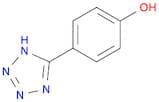
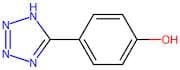
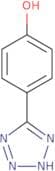
:4-(1H-Tetrazol-5-yl)phenol
Description:
4-(1H-Tetrazol-5-yl)phenol, with the CAS number 51517-88-5, is an organic compound characterized by the presence of a tetrazole ring and a phenolic group. This compound features a tetrazole moiety, which is a five-membered ring containing four nitrogen atoms and one carbon atom, contributing to its unique chemical reactivity and potential biological activity. The phenolic part of the molecule provides hydroxyl (-OH) functionality, which can participate in hydrogen bonding and influence solubility and reactivity. 4-(1H-Tetrazol-5-yl)phenol is often studied for its potential applications in pharmaceuticals, agrochemicals, and materials science due to its ability to act as a ligand in coordination chemistry and its possible role as an intermediate in organic synthesis. Additionally, the compound may exhibit interesting properties such as antimicrobial or anti-inflammatory activities, making it a subject of interest in medicinal chemistry. Its stability, solubility, and reactivity can vary based on environmental conditions and the presence of other functional groups in a given reaction context.
Formula:C7H6N4O
InChI:InChI=1/C7H6N4O/c12-6-3-1-5(2-4-6)7-8-10-11-9-7/h1-4,12H,(H,8,9,10,11)
SMILES:c1cc(ccc1c1n[nH]nn1)O
Synonyms:- 4-(2H-tetrazol-5-yl)phenol
- phenol, 4-(2H-tetrazol-5-yl)-
Sort by
Purity (%)
0
100
|
0
|
50
|
90
|
95
|
100
Found 4 products.
4-(1H-Tetrazol-5-yl)phenol
CAS:Formula:C7H6N4OPurity:98%Color and Shape:SolidMolecular weight:162.14875-(4-Hydroxyphenyl) tetrazole
CAS:<p>5-(4-Hydroxyphenyl) tetrazole is a hydrophobic ligand that has been shown to bind to cisplatin and therefore may have potential use in cancer therapy. It has also been used as an anti-inflammatory agent with the potential to inhibit prostaglandin synthesis. 5-(4-Hydroxyphenyl) tetrazole binds to hydrogen peroxide, which is a strong oxidizing agent and produces reactive oxygen species (ROS). ROS can cause DNA damage and lead to cell death by apoptosis or necrosis. 5-(4-Hydroxyphenyl) tetrazole reacts with cisplatin, which is a chemotherapeutic agent that is used in the treatment of various types of cancer. Cisplatin binds to DNA and prevents replication, leading to cell death. Hydrophobic ligands such as 5-(4-Hydroxyphenyl) tetrazole are able to bind more tightly than other ligands because</p>Formula:C7H6N4OPurity:Min. 95%Molecular weight:162.15 g/mol