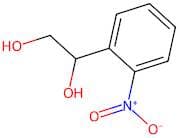
CAS 51673-59-7
:1-(2-nitrophenyl)-1,2-ethanediol
Description:
1-(2-Nitrophenyl)-1,2-ethanediol, with the CAS number 51673-59-7, is an organic compound characterized by the presence of a nitrophenyl group attached to a diol structure. This compound features two hydroxyl (-OH) groups on a two-carbon chain, which contributes to its reactivity and potential for hydrogen bonding. The nitro group (-NO2) on the phenyl ring enhances the compound's polarity and can influence its solubility in various solvents. Typically, compounds like this may exhibit properties such as moderate to high melting points and varying degrees of solubility in polar and non-polar solvents, depending on the balance between the hydrophilic hydroxyl groups and the hydrophobic aromatic ring. Additionally, the presence of the nitro group can impart unique electronic properties, making it a candidate for various chemical reactions, including nucleophilic substitutions and reductions. This compound may also have applications in organic synthesis and materials science, although specific uses would depend on its reactivity and stability under different conditions.
Formula:C8H9NO4
InChI:InChI=1/C8H9NO4/c10-5-8(11)6-3-1-2-4-7(6)9(12)13/h1-4,8,10-11H,5H2
SMILES:c1ccc(c(c1)C(CO)O)N(=O)=O
Synonyms:- 1-(2-Nitrophenyl)Ethane-1,2-Diol
Sort by
Purity (%)
0
100
|
0
|
50
|
90
|
95
|
100
Found 2 products.
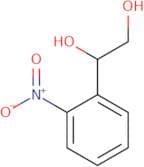
1-(2-Nitrophenyl)ethane-1,2-diol
CAS:1-(2-Nitrophenyl)ethane-1,2-diolPurity:95%Molecular weight:183.16g/mol1-(2-Nitrophenyl)-1,2-ethanediol
CAS:1-(2-Nitrophenyl)-1,2-ethanediol is a chemical that has been shown to inhibit the glutamate-induced increase in cytosolic Ca2+ concentration. It also prevents the loss of membrane integrity and protects against cell death by inhibiting apoptosis. 1-(2-Nitrophenyl)-1,2-ethanediol also inhibits amp-activated protein kinase activity and increases ATP production. These effects may be due to its ability to reduce intracellular Ca2+ levels and prevent Ca2+ overload in mitochondria. 1-(2-Nitrophenyl)-1,2-ethanediol has been shown to have a protective effect on isolated heart cells and ventricular myocytes from hypoxia/reoxygenation injury and is an effective model system for investigating biochemical properties of glutamate excitotoxicity.Formula:C8H9NO4Purity:Min. 95%Color and Shape:PowderMolecular weight:183.16 g/mol