CAS 51811-82-6
:Giemsa stain
Description:
Giemsa stain is a synthetic dye commonly used in histology and cytology for staining biological tissues and cells. It is particularly effective for visualizing cellular components, such as nuclei and cytoplasm, making it invaluable in the examination of blood smears and the identification of various cell types, including those in hematological disorders. The stain is a mixture of methylene blue, eosin, and azure B, which allows it to impart distinct colors to different cellular structures. Giemsa stain is known for its ability to highlight chromatin and differentiate between various types of leukocytes, aiding in the diagnosis of conditions like malaria and other parasitic infections. The staining process typically involves fixing the cells, followed by exposure to the Giemsa solution, which can be adjusted for optimal results depending on the specific application. Its ease of use and effectiveness in providing clear contrast between cellular components make Giemsa stain a staple in laboratory settings.
Formula:Unspecified
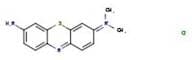
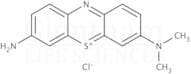
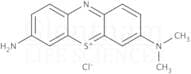
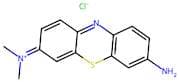
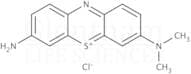
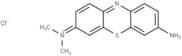
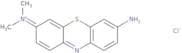
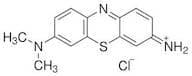
InChI:InChI=1/C14H13N3S.ClH/c1-17(2)10-4-6-12-14(8-10)18-13-7-9(15)3-5-11(13)16-12;/h3-8,15H,1-2H3;1H
SMILES:CN(C)c1ccc2c(c1)sc1cc(=N)ccc1n2.Cl
Synonyms:- Azure Mixture Sicc. Giemsa Stain For Microscopy
- Azure Mixture sicc.
- Azure Stains
- Biol. stains, Giemsa
- Giemsa
- Giemsa Stain, Modified Solution
- Giemsa biological stains
- Giemsa stains
- Giemsa stains, biological
- Giemsa's stain
- Giemsa-Romanowsky stain
- N-(7-amino-3H-phenothiazin-3-ylidene)-N-methylmethanaminium chloride
- Romanowsky Giemsa stain
- Stains, biol., Giemsa
- Stains, biological, Giemsa
- Stains, biological, Giemsa stain
- See more synonyms
Sort by
Purity (%)
0
100
|
0
|
50
|
90
|
95
|
100
Found 9 products.
Giemsa Stain
CAS:Giemsa Stain is used as a laboratory reagent and stain for microscopy. It is also used for the histopathologic detection of malaria and other parasites such as spirochete and protozoan. The stain is also been incorporated in differential staining between bacterial and human cells. The compound has bFormula:C14H14ClN3SColor and Shape:Dark green or dark brown to black, PowderMolecular weight:291.80Giemsa stain, powder
CAS:Formula:C14H14ClN3SColor and Shape:Dark green to black powderMolecular weight:291.80Giemsa stain, powder, certified
CAS:Formula:C14H14ClN3SColor and Shape:Dark green to black powderMolecular weight:291.80Giemsa stain
CAS:Giemsa stain colors chromatin and nuclear membranes, useful in detecting malaria and various pathogens in histology.Formula:C14H14ClN3SColor and Shape:SolidMolecular weight:291.8Giemsa stain
CAS:Giemsa stain is used to identify the morphology of cells and microorganisms. It is used in clinical pathology for the diagnosis of various diseases, such as malaria. Giemsa stain consists of a mixture of methylene blue dye, eosin Y dye, and a buffer solution. If a redox potential is applied to Giemsa stain, an oxidizing agent is produced that can be detected by electrochemical impedance spectroscopy. The polymerase chain reaction (PCR) has been shown to be inhibited by this molecule when titrated at concentrations higher than 0.5 mM. This inhibition may be due to its ability to bind with inhibitor molecules or its ability to react with transfer reactions in the cell membrane.
Formula:C14H14ClN3SPurity:Min. 95%Color and Shape:PowderMolecular weight:291.8 g/molGiemsa Stain
CAS:Formula:C14H14ClN3SColor and Shape:Dark green, Powder, Clear, Blue with green fluorescenceMolecular weight:291.8Giemsa Stain for cell culture, Endotoxin (BET) 0.05EU/mg
CAS:Color and Shape:Dark green, Powder, Clear, Blue with green fluorescence