CAS 520-26-3
:Hesperidin
Description:
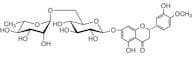
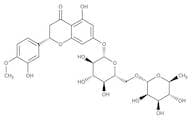
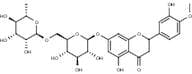
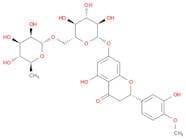
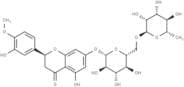
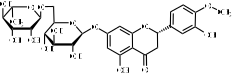
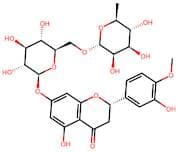
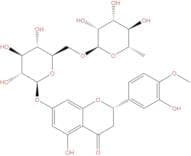
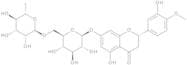
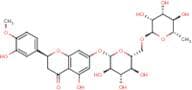
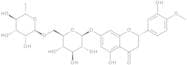
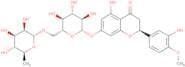
Hesperidin is a flavonoid glycoside primarily found in citrus fruits, particularly in the peels of oranges and lemons. It is known for its antioxidant properties and potential health benefits, including anti-inflammatory and vascular protective effects. The chemical structure of hesperidin consists of a flavanone backbone, specifically hesperetin, linked to a rutinose sugar moiety. This compound is often studied for its role in promoting cardiovascular health and improving circulation. Hesperidin is also recognized for its ability to enhance the absorption of other nutrients and may contribute to the overall health benefits associated with citrus consumption. In terms of solubility, hesperidin is generally soluble in water and alcohol, making it suitable for various formulations in dietary supplements and functional foods. Its CAS number, 520-26-3, is a unique identifier that facilitates the identification and study of this compound in scientific literature and regulatory contexts. Overall, hesperidin is a significant bioactive compound with various applications in health and nutrition.
Formula:C28H34O15
InChI:InChI=1S/C28H34O15/c1-10-21(32)23(34)25(36)27(40-10)39-9-19-22(33)24(35)26(37)28(43-19)41-12-6-14(30)20-15(31)8-17(42-18(20)7-12)11-3-4-16(38-2)13(29)5-11/h3-7,10,17,19,21-30,32-37H,8-9H2,1-2H3/t10-,17-,19+,21-,22+,23+,24-,25+,26+,27+,28+/m0/s1
InChI key:InChIKey=QUQPHWDTPGMPEX-QJBIFVCTSA-N
SMILES:O=C1C=2C(O[C@@H](C1)C3=CC(O)=C(OC)C=C3)=CC(O[C@@H]4O[C@H](CO[C@H]5[C@H](O)[C@H](O)[C@@H](O)[C@H](C)O5)[C@@H](O)[C@H](O)[C@H]4O)=CC2O
Synonyms:- (2S)-5-hydroxy-2-(3-hydroxy-4-methoxyphenyl)-4-oxo-3,4-dihydro-2H-chromen-7-yl 6-O-(6-deoxy-alpha-L-erythro-hexopyranosyl)-beta-D-threo-hexopyranoside
- (2S)-5-hydroxy-2-(3-hydroxy-4-methoxyphenyl)-4-oxo-3,4-dihydro-2H-chromen-7-yl 6-O-(6-deoxy-alpha-L-mannopyranosyl)-beta-D-glucopyranoside
- (2S)-5-hydroxy-2-(3-hydroxy-4-methoxyphenyl)-4-oxo-3,4-dihydro-2H-chromen-7-yl 6-O-(6-deoxy-beta-L-mannopyranosyl)-beta-D-glucopyranoside
- (2S)-7-[[6-O-(6-Deoxy-α-<span class="text-smallcaps">L</smallcap>-mannopyranosyl)-β-<smallcap>D</span>-glucopyranosyl]oxy]-2,3-dihydro-5-hydroxy-2-(3-hydroxy-4-methoxyphenyl)-4H-1-benzopyran-4-one
- (2S)-Hesperidin
- (S)-7-[[6-O-(6-Deoxy-alpha-L-mannopyranosyl)-beta-D-glucopyranosyl]oxy]-2,3-dihydro-5-hydroxy-2-(3-hydroxy-4-methoxyphenyl)-4H-1-benzopyran-4-one
- 4H-1-Benzopyran-4-one, 7-[[6-O-(6-deoxy-α-<span class="text-smallcaps">L</smallcap>-mannopyranosyl)-β-<smallcap>D</span>-glucopyranosyl]oxy]-2,3-dihydro-5-hydroxy-2-(3-hydroxy-4-methoxyphenyl)-, (2S)-
- 4H-1-Benzopyran-4-one, 7-[[6-O-(6-deoxy-α-<span class="text-smallcaps">L</smallcap>-mannopyranosyl)-β-<smallcap>D</span>-glucopyranosyl]oxy]-2,3-dihydro-5-hydroxy-2-(3-hydroxy-4-methoxyphenyl)-, (S)-
- 4H-1-Benzopyran-4-one, 7-[[6-O-(6-deoxy-α-L-mannopyranosyl)-β-D-glucopyranosyl]oxy]-2,3-dihydro-5-hydroxy-2-(3-hydroxy-4-methoxyphenyl)-, (2S)-
- 4H-1-Benzopyran-4-one, 7-[[6-O-(6-deoxy-α-L-mannopyranosyl)-β-D-glucopyranosyl]oxy]-2,3-dihydro-5-hydroxy-2-(3-hydroxy-4-methoxyphenyl)-, (S)-
- 5-Hydroxy-2-(3-Hydroxy-4-Methoxy-Phenyl)-7-[3,4,5-Trihydroxy-6-[(3,4,5 -Trihydroxy-6-Methyl-Oxan-2-Yl)Oxymethyl]Oxan-2-Yl]Oxy-Chroman-4-One
- 5-hydroxy-2-(3-hydroxy-4-methoxyphenyl)-4-oxo-3,4-dihydro-2H-chromen-7-yl 6-O-(6-deoxyhexopyranosyl)hexopyranoside
- 7-[[6-O-(6-deoxy-.alpha.-L-mannopyranosyl)-.be ta.-D-glucopyranosyl ]oxy]-2,3-dihydro-5-hydroxy-2-(3-hydroxy-4-methox yphenyl)-, (S)-, 4H-1-Benzopyran-4-one, 7-[[6-O- (6-deoxy-.alpha.-L-mannopyranosyl-.bet a.-D-glucopyranosyl] oxy]-2,3-dihydro-5-hydr
- 7-[[6-O-(6-deoxy-α-L-mannopyranosyl)-β-D-glucopyranosyl]oxy]-2,3-dihydro-5-hydroxy-2-(3-hydroxy-4-methoxyphenyl)-4H-1-benzopyran-4-one
- Atripliside B
- Cirantin
- Flavanone, 3',5,7-trihydroxy-4'-methoxy-, 7-(6-O-α-L-rhamnosyl-D-glucoside)
- Flavanone, 3′,5,7-trihydroxy-4′-methoxy-, 7-(6-O-α-<span class="text-smallcaps">L</smallcap>-rhamnosyl-<smallcap>D</span>-glucoside)
- Glucopyranoside
- Hesperetin 7-O-rutinoside
- Hesperetin 7-[6-O- (6-deoxy-.alpha.-L-mannopyranosyl)]-.beta.-D-gluco pyranosid e)
- Hesperetin 7-rhamnoglucoside
- Hesperetin 7-rutinoside
- Hesperidin
- Hesperidina
- Hesperidine
- Hesperidoside
- Hesperitin 7-O-rutinoside
- Hesperitin-7-rhamnoglucoside
- Nsc 44184
- Nsc44184
- S)-(-)-Hesperidine
- Usaf cf-3
- Vitamin P
- hesperetin-7[6-O-(6-deoxy-.alpha.-L-mannopyranosyl)]-beta-D-
- (2S)-7-[[6-O-(6-Deoxy-α-L-mannopyranosyl)-β-D-glucopyranosyl]oxy]-2,3-dihydro-5-hydroxy-2-(3-hydroxy-4-methoxyphenyl)-4H-1-benzopyran-4-one
- See more synonyms
Sort by
Purity (%)
0
100
|
0
|
50
|
90
|
95
|
100
Hesperidin
CAS:Formula:C28H34O15Purity:>90.0%(T)(HPLC)Color and Shape:White to Light yellow powder to crystalMolecular weight:610.57Hesperidin, 95%
CAS:Acts as an antioxidantFormula:C28H34O15Purity:95%Color and Shape:White to pale yellow, PowderMolecular weight:610.57Hesperidin
CAS:Hesperidin analytical standard provided with w/w absolute assay, to be used for quantitative titration.Formula:C28H34O15Purity:(HPLC) ≥98%Color and Shape:PowderMolecular weight:610.57Hesperidin
CAS:Other glycosides, natural or reproduced by synthesis, and their salts, ethers, esters and other derivativesFormula:C28H34O15Color and Shape:Beige PowderMolecular weight:610.18977(2S)-5-hydroxy-2-(3-hydroxy-4-methoxyphenyl)-7-{[(2S,3R,4S,5S,6R)-3,4,5-trihydroxy-6-({[(2R,3R,4R,5R,6S)-3,4,5-trihydroxy-6-methyloxan-2-yl]oxy}methyl)oxan-2-yl]oxy}-3,4-dihydro-2H-1-benzopyran-4-one
CAS:Formula:C28H34O15Purity:97%Color and Shape:SolidMolecular weight:610.5606Hesperidin
CAS:Hesperidin (Cirantin), a citrus-fruit flavanone glycoside, boasts antioxidant, anti-inflammatory, anti-carcinogenic, and cardiovascular benefits.Formula:C28H34O15Purity:97.74% - 97.75%Color and Shape:Fine Brownish Powder Solid PowderMolecular weight:610.56Hesperidin (Diosmin EP Impurity B)
CAS:Formula:C28H34O15Color and Shape:White To Off-White SolidMolecular weight:610.57Hesperidin
CAS:Formula:C28H34O15Purity:≥ 90.0%Color and Shape:Off-white to yellow or brown powderMolecular weight:610.56Hesperidin
CAS:Hesperidin, a bioflavonoid, is an abundant and inexpensive by-product of Citrus cultivation, has antioxidant, anti-inflammatory, hypolipidemic, vasoprotective and anticarcinogenic and cholesterol lowering actions; can improves the health of capillaries by reducing the capillary permeability; can inhibit following enzymes: phospholipase A2, lipoxygenase, HMG-CoA reductase and cyclo-oxygenase.Formula:C28H34O15Purity:95%~99%Color and Shape:PowderMolecular weight:610.565Diosmin EP Impurity B
CAS:Controlled ProductFormula:C28H34O15Color and Shape:NeatMolecular weight:610.56Hesperidin
CAS:Natural glycosideFormula:C28H34O15Purity:≥ 90.0 % (HPLC)Color and Shape:PowderMolecular weight:610.57Hesperidine
CAS:Controlled ProductImpurity Diosmin EP Impurity B
Applications Hesperidine (Diosmin EP Impurity B) is a flavanone found in citrus fruits, also regarded as Vitamin P.
References Ananth, V., et al.: J. Pharm. Res., 2, 1739 (2009), Cejudo B., et al.: J. Agric. Food Chem., 58, 11814 (2010),Formula:C28H34O15Color and Shape:Light YellowMolecular weight:610.56S-Hesperidin
CAS:Please enquire for more information about S-Hesperidin including the price, delivery time and more detailed product information at the technical inquiry form on this pageFormula:C28H34O15Molecular weight:610.56 g/molHesperidin (natural)
CAS:Hesperidin is a bioflavonoid compound, which is naturally sourced from citrus fruits, primarily found in the peels of oranges and lemons. Its mode of action involves acting as a potent antioxidant by scavenging free radicals and reducing oxidative stress. Hesperidin also exhibits anti-inflammatory effects by modulating various signaling pathways and inhibiting the release of pro-inflammatory cytokines.In scientific applications, hesperidin is extensively studied for its potential therapeutic benefits. Its antioxidant properties make it a candidate for mitigating oxidative damage in various tissues, while its anti-inflammatory effects are explored in the context of chronic inflammatory conditions. Research has shown potential cardiovascular benefits, including the improvement of endothelial function and lipid profiles. Additionally, hesperidin is investigated for its neuroprotective effects and potential in managing metabolic disorders. These diverse applications highlight the significance of hesperidin in pharmacological research, aiming to leverage its natural properties for health benefits.Formula:C28H34O15Purity:Min. 90 Area-%Color and Shape:Off-White PowderMolecular weight:610.56 g/molrac Hesperidine-d3
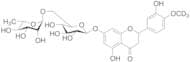
CAS:Controlled ProductFormula:C28D3H31O15Color and Shape:NeatMolecular weight:613.579