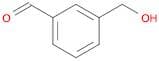
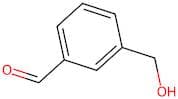
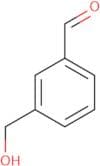
CAS 52010-98-7
:3-(Hydroxymethyl)benzaldehyde
- 3-(Hydroxymethyl)benzaldehyde
- m-(Hydroxymethyl)benzaldehyde
- m-Tolualdehyde, α-hydroxy-
- m-Tolualdehyde,a-hydroxy- (7CI)
- Benzaldehyde, 3-(hydroxymethyl)-
3-(HYDROXYMETHYL)BENZALDEHYDE
CAS:Formula:C8H8O2Purity:97%Color and Shape:LiquidMolecular weight:136.14793-(Hydroxymethyl)benzaldehyde
CAS:3-(Hydroxymethyl)benzaldehydePurity:97%Molecular weight:136.15g/mol3-Formylbenzyl alcohol
CAS:3-Formylbenzyl alcohol is a fatty acid that has been shown to inhibit the growth of bacteria by binding to the hydroxyl group of the bacterial cell membrane. 3-Formylbenzyl alcohol's antimicrobial activity is due to its ability to inhibit the production of fatty acids in the cell membrane, preventing the formation of an outer layer that protects bacteria from attack. The antibacterial agent also inhibits protein synthesis and prevents DNA replication, resulting in cell death. 3-Formylbenzyl alcohol binds to bacteria through hydrogen bonding and has been shown to be effective against Staphylococcus aureus, Bacillus subtilis, Escherichia coli, and Pseudomonas aeruginosa. The mechanism for this action is not clear but may involve an intramolecular hydrogen bond or nucleophilic attack by one of its carbonyl groups on a nitrogen atom in the bacterial molecule.
Formula:C8H8O2Purity:Min. 95%Color and Shape:Off-White PowderMolecular weight:136.15 g/molRef: 3D-FF69891
Discontinued product