CAS 52022-77-2
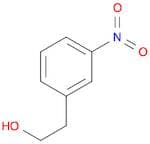
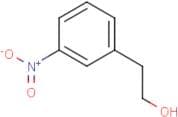
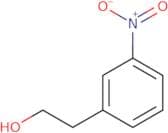
:2-(3-Nitrophenyl)ethanol
Description:
2-(3-Nitrophenyl)ethanol, with the CAS number 52022-77-2, is an organic compound characterized by the presence of a nitrophenyl group attached to an ethanol moiety. This compound typically appears as a solid or viscous liquid, depending on its purity and environmental conditions. It features a hydroxyl (-OH) group, which contributes to its solubility in polar solvents like water and alcohols. The nitro group (-NO2) on the aromatic ring enhances its reactivity, making it a useful intermediate in organic synthesis, particularly in the production of pharmaceuticals and agrochemicals. The presence of both the hydroxyl and nitro groups can influence its chemical behavior, including hydrogen bonding and electrophilic substitution reactions. Additionally, 2-(3-Nitrophenyl)ethanol may exhibit biological activity, which can be of interest in medicinal chemistry. Safety data should be consulted, as compounds containing nitro groups can pose health risks and require careful handling. Overall, this compound serves as a valuable building block in various chemical applications.
Formula:C8H9NO3
InChI:InChI=1S/C8H9NO3/c10-5-4-7-2-1-3-8(6-7)9(11)12/h1-3,6,10H,4-5H2
InChI key:InChIKey=PWZWTSYUZQZFKE-UHFFFAOYSA-N
SMILES:C(CO)C1=CC(N(=O)=O)=CC=C1
Synonyms:- 1-(3-Nitrophenyl)Ethanol
- 2-(3-Nitrophenyl)ethan-1-ol
- 2-(3-Nitrophenyl)ethanol
- 3-Nitrobenzeneethanol
- 3-Nitrophenylethyl alcohol
- Benzeneethanol, 3-nitro-
- Phenethyl alcohol, m-nitro-
- m-Nitrophenethyl alcohol
- β-(m-Nitrophenyl)ethanol
Sort by
Purity (%)
0
100
|
0
|
50
|
90
|
95
|
100
Found 4 products.
3-Nitrophenethyl alcohol
CAS:3-Nitrophenethyl alcohol is a trifluoroacetic acid derivative that has been shown to have antimicrobial activity against multidrug resistant Gram-negative bacteria. 3NPHA is an electrophilic compound that reacts with the nucleophilic amino acids in proteins, causing the protein to be irreversibly denatured. 3NPHA has been shown to inhibit the growth of bacteria by binding to ribosomal RNA, preventing protein synthesis and cell division. The specificities of this drug are not yet well understood, but it has been found to bind to both isomers of the nucleotide erythromycin A. 3-Nitrophenethyl alcohol may be used as a catalyst for reactions involving isoxazoles, which are compounds that can act as anticancer agents.Formula:C8H9NO3Purity:Min. 95%Molecular weight:167.16 g/mol